Goals · 1a
Finding out what we want: voting and consequence
Goal: find out what each person and each group wants, and respect it.
A group as a person
A group has many wants, just like a single person, and everything else said about persons holds for groups too. Its wants, beliefs and problems are differently strong, contradictory, dependent, uncertain, layered and changing. So a group can be described like one person. It can hold conflicting wants and still know what it wants, just as a single person can. A shared flat wants quiet in the evenings and wants to have friends over, and still manages to live together.
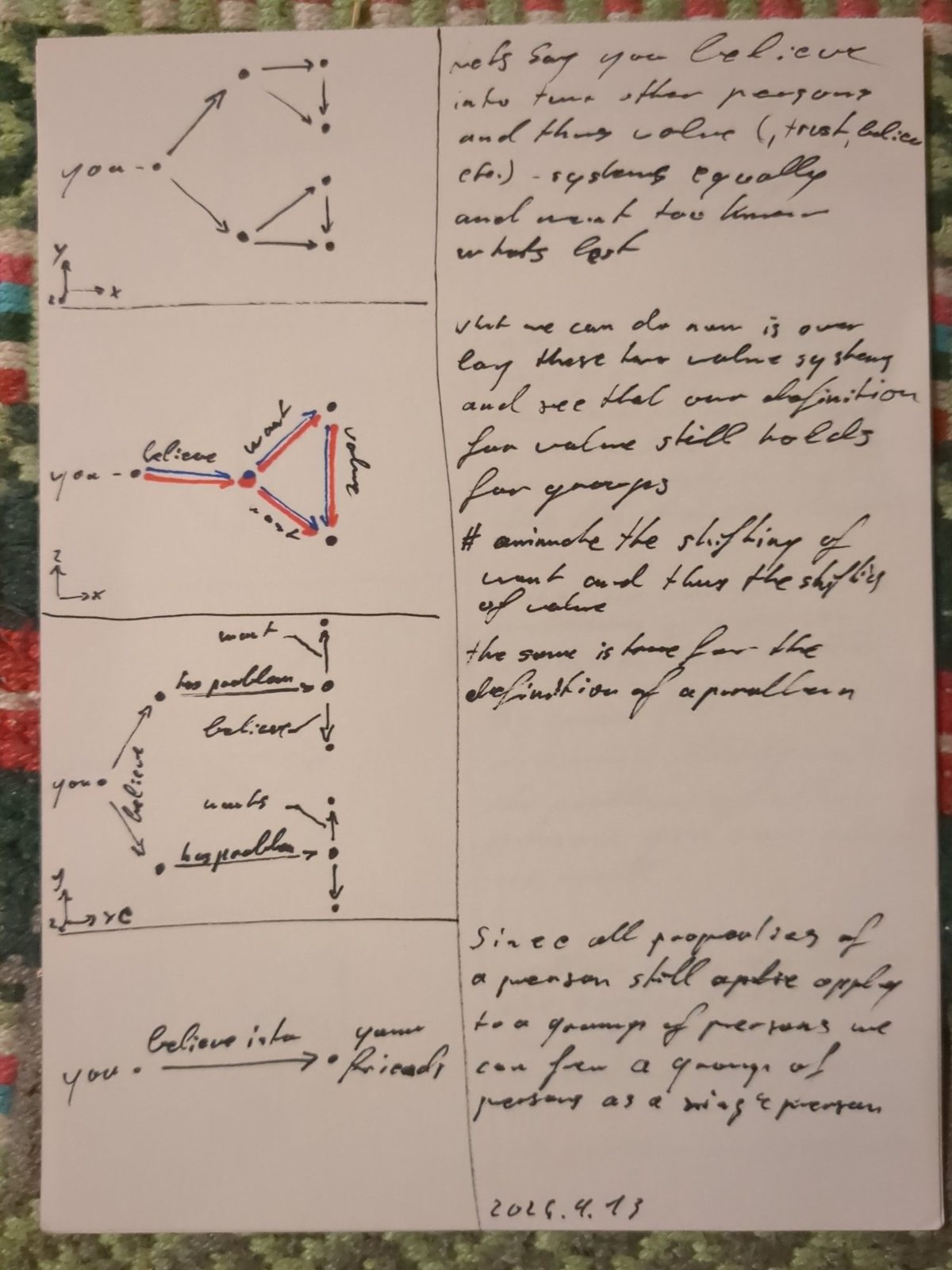
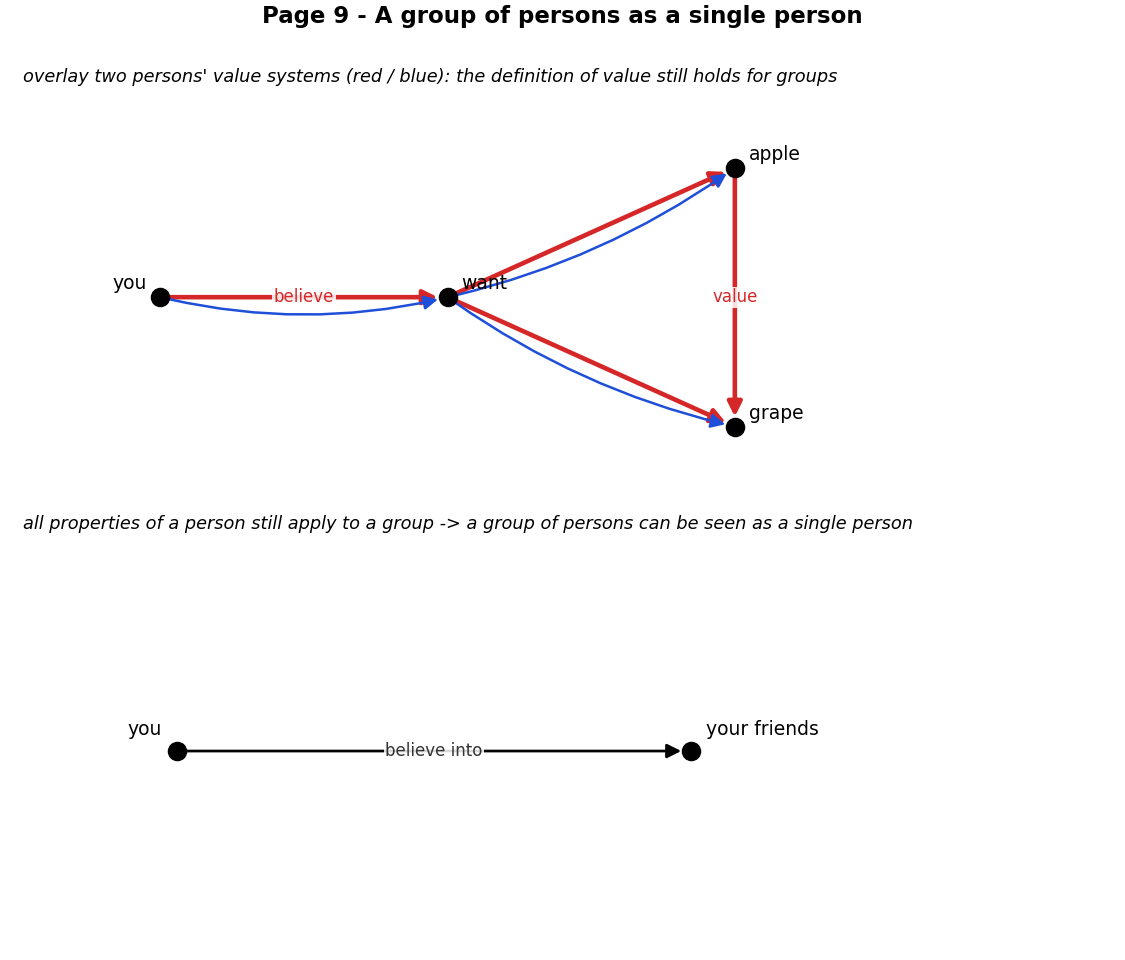
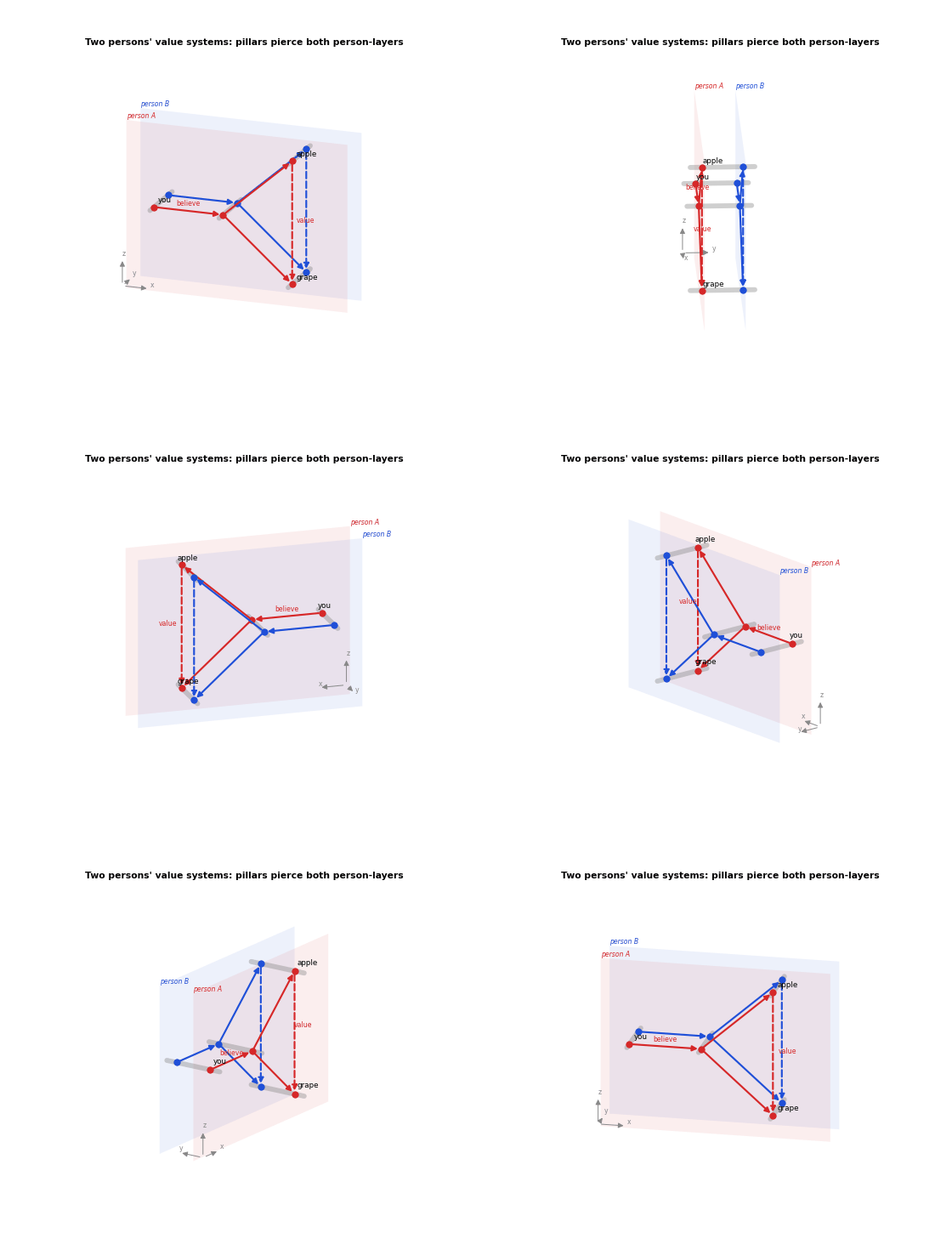
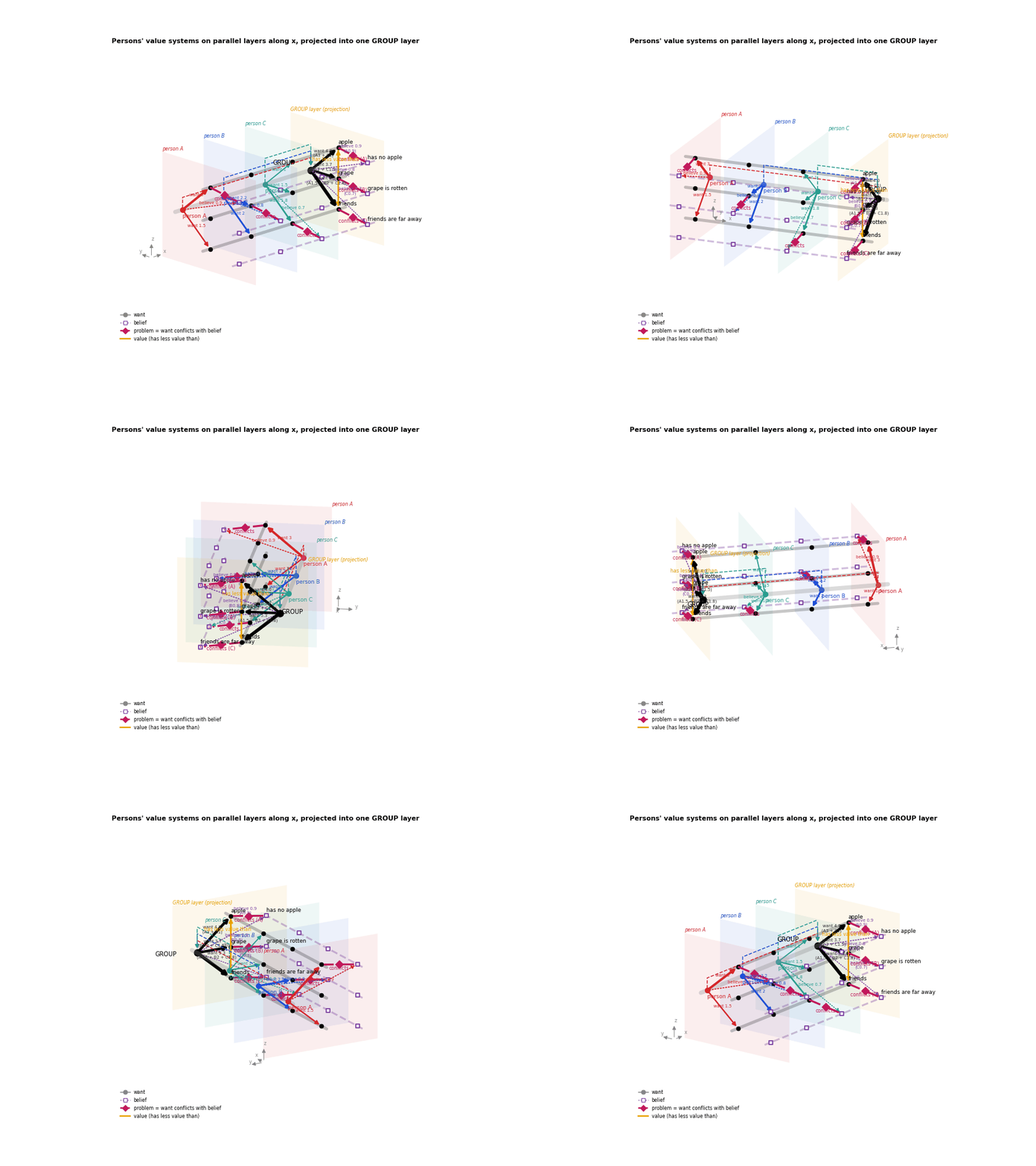
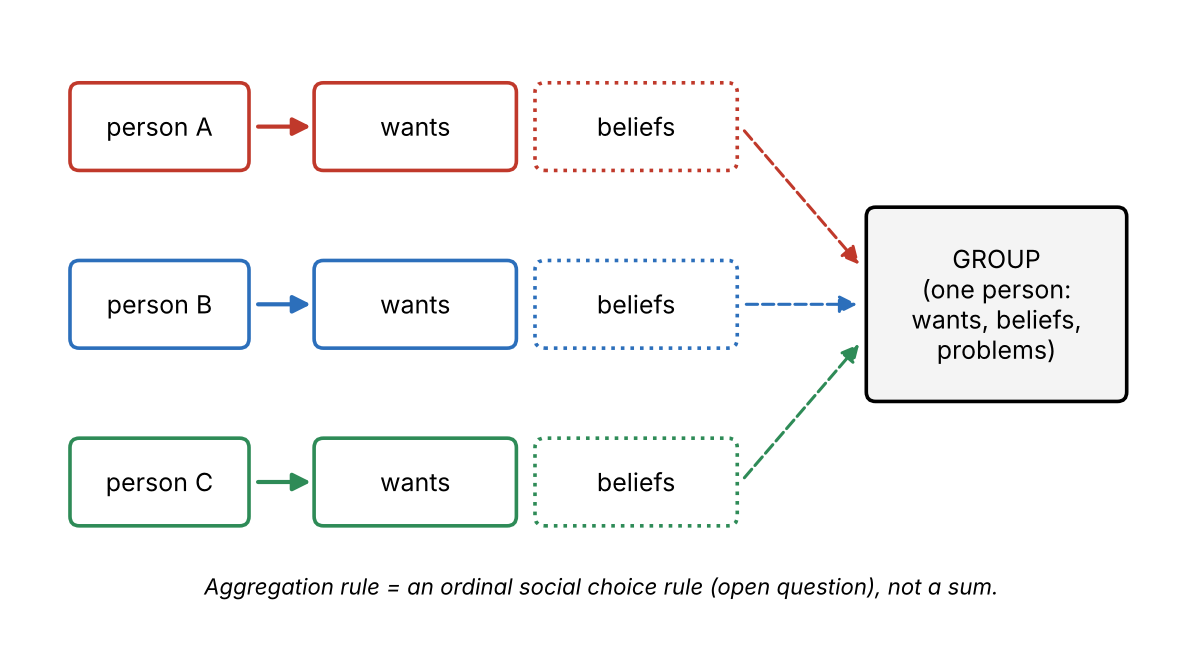
Illustration: shows what follows from these assumptions; not evidence.
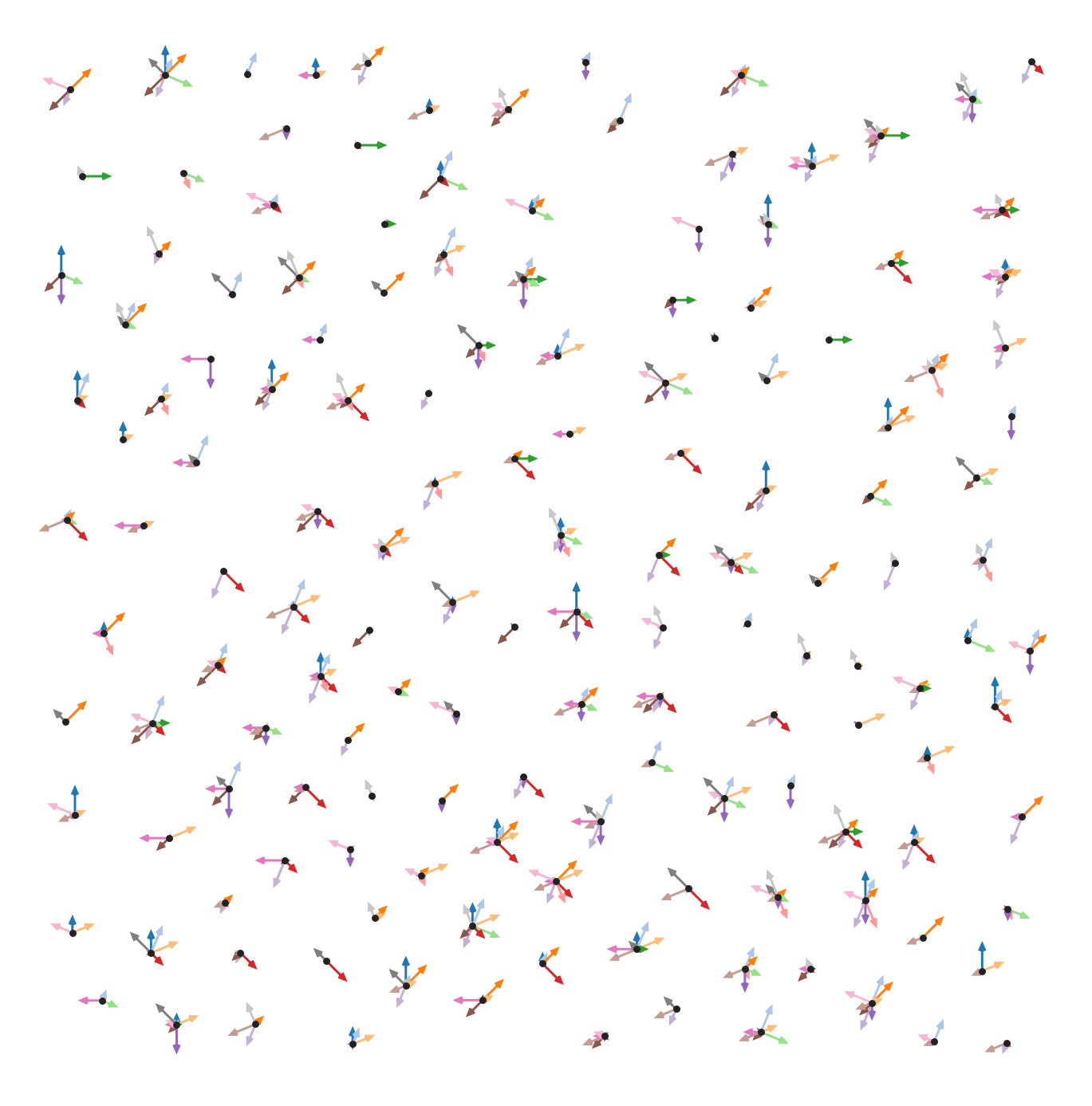
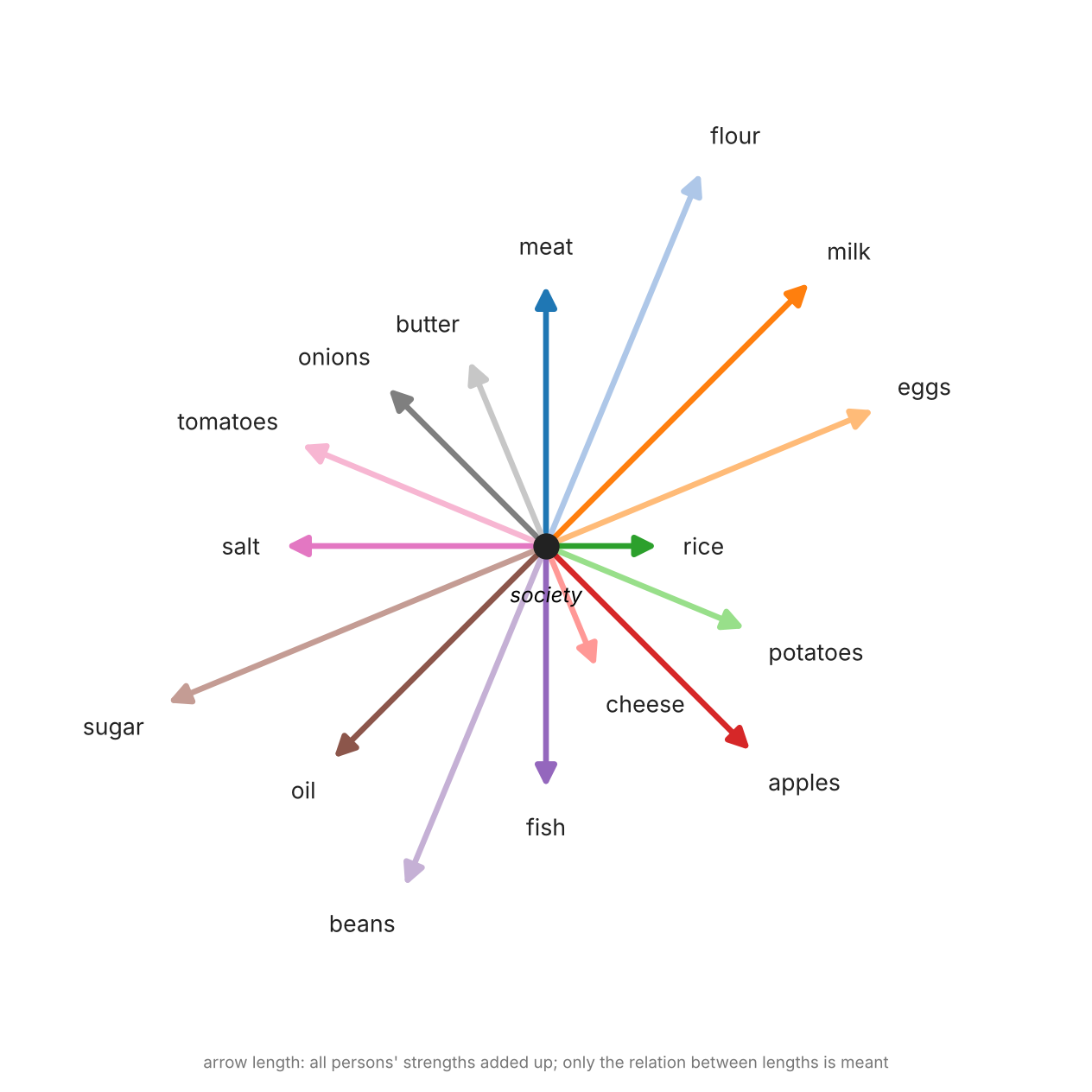
To make groups visible, the models on this site draw a small society as dots, one per person, each with arrows for what the person wants and how strongly. Added up, they give a picture of what the society as a whole wants. The same small society is used again in Finding out what we want: money as a signal.
Knowing, but not being able to say it
A society often knows its problems and many of the solutions, but lacks the tools to communicate them. The knowledge exists, spread over many people. What is missing is a way for it to travel from those who know to those who could act, and back. The people who work in a hospital usually know what goes wrong there long before any report says so.
Some troubles are symptoms of this. Extremism and conspiracy theories can be read as signs of wants and fears that found no channel that carried them.
Language itself has limits. It can be one-way, it blurs, and sometimes we don't communicate at all. "The border of language is a mirror": where words end, we see ourselves rather than the other.
Consequence and information
Choices without personal consequence carry little information. What people want depends on circumstance and consequence. In a poll, answering costs nothing: "if it costs nothing, anyone will be a hero." Under real consequence, people may choose very differently; true character shows under pressure. Between a poll and a choice about one's own life lies a whole range, and the further along it, the more a choice tells. Many say in surveys they would pay more for fair products; far fewer do when they stand at the shelf.
A single ballot does not determine the result. Seen from one voter, the outcome is not decided by their own vote. That raises the question of how much information an election actually uses: how many ballots could be removed without changing the result. In a large election, removing a whole village's ballots usually changes nothing.
How conflicts are made
Most conflicts are not exclusive; the way we decide makes them so. When there are only a few options and only one can win, wants that could exist side by side are forced into competition. Solutions in parallel usually exist, but a single choice can't express them. Two neighbours argue about a shared garden, one wanting vegetables and the other flowers, when the garden has room for both.
What a vote keeps, and what it loses
Everything above comes together in the one tool we use to find out what a society wants: the vote.
A vote reduces a whole value system to one choice among a few. Everything a person wants, with all its properties, has to fit into one cross. The vote can't hear:
- that many things are wanted at once, because only one can be marked;
- how strongly each is wanted, because a cross is a cross;
- that something is wanted and not wanted, because only yes can be said;
- what depends on what, under which circumstances and with which consequences;
- how sure the voter is;
- wants about wants;
- that all of this changes, because it is asked only every few years.
What is lost this way cannot be recovered afterwards. Someone who cares about schools, about rent and about clean air has to pick the party that seems least wrong on all three, and nobody learns which of the three mattered most.
Illustration: shows what follows from these assumptions; not evidence.
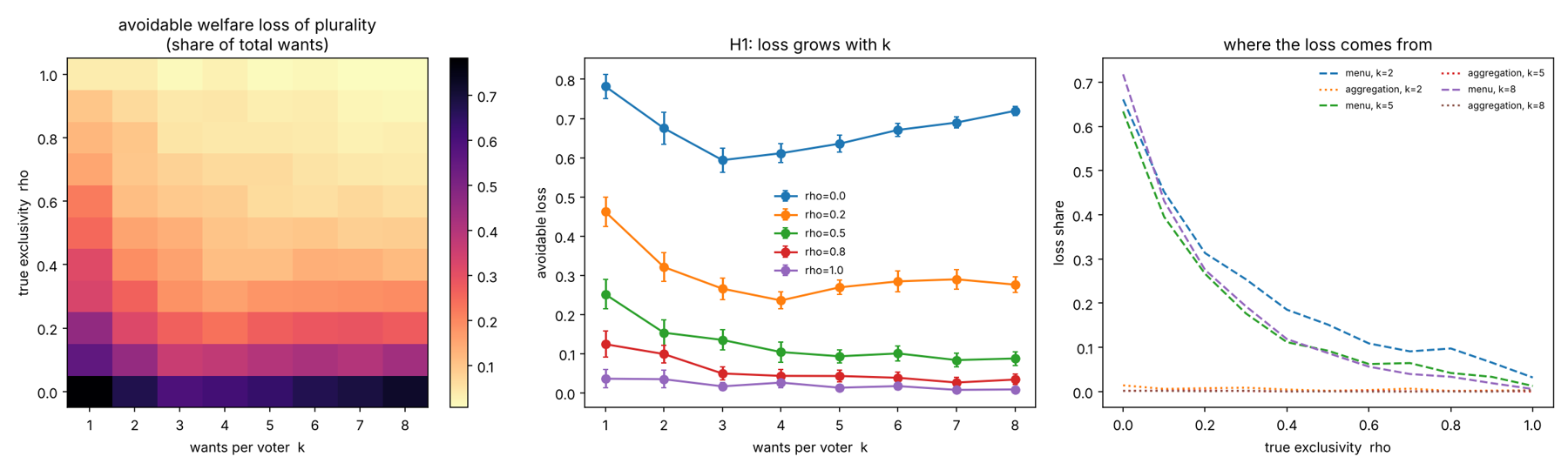
The vote makes every solution exclusive, at the root of how we decide. This is where conflicts are made. A society whose problems could mostly be solved side by side is asked to choose one set of answers against all others. Every solution offered is placed in competition with every other, before anyone has asked whether they exclude each other at all. That happens not in one question but in all of them, at once, at the root of our decision making.
The vote chooses who decides, not what is wanted. It mostly chooses a person or a party, who then makes the real choices. Who is trusted to turn a society's values into action, and to say what the current problem is, remains open. A family that elects one member to plan the holiday has decided who plans, not where anyone wants to go.
Each person has a choice; the community does not. Each voter can choose among the options on the ballot. But the community as a whole has no way to state what it wants as a community, with its own priorities and contradictions. A town can count how many voted for each party, but it never says what the town wants.