Goals · 5
Reducing problems at their causes
Goal: reduce problems at their causes, not only at their symptoms.
Problems form networks: some cause others, some are only symptoms (see Foundations). An effort can reduce a problem, or only its symptom.
Supply and demand needs scarcity. In care, this scarcity causes bad conditions, suffering and avoidable deaths. A price only moves when something is scarce, so a market reacts to a shortage once it is felt, not before. The shortage of nurses grew as a by-product of such a system. Nobody built it out of malice.
Illustration: shows what follows from these assumptions; not evidence.
A model of care over thirty years. Need grows slowly as the society ages, which is known decades ahead, and an epidemic comes that nobody could foresee. Training takes three years. Overload makes people leave. Three ways of supplying care are compared: a market where pay rises only once a shortage is felt; a predictive system that trains from a forecast and brings back trained people who are not working as soon as need jumps; and the same predictive system with a poor forecast.
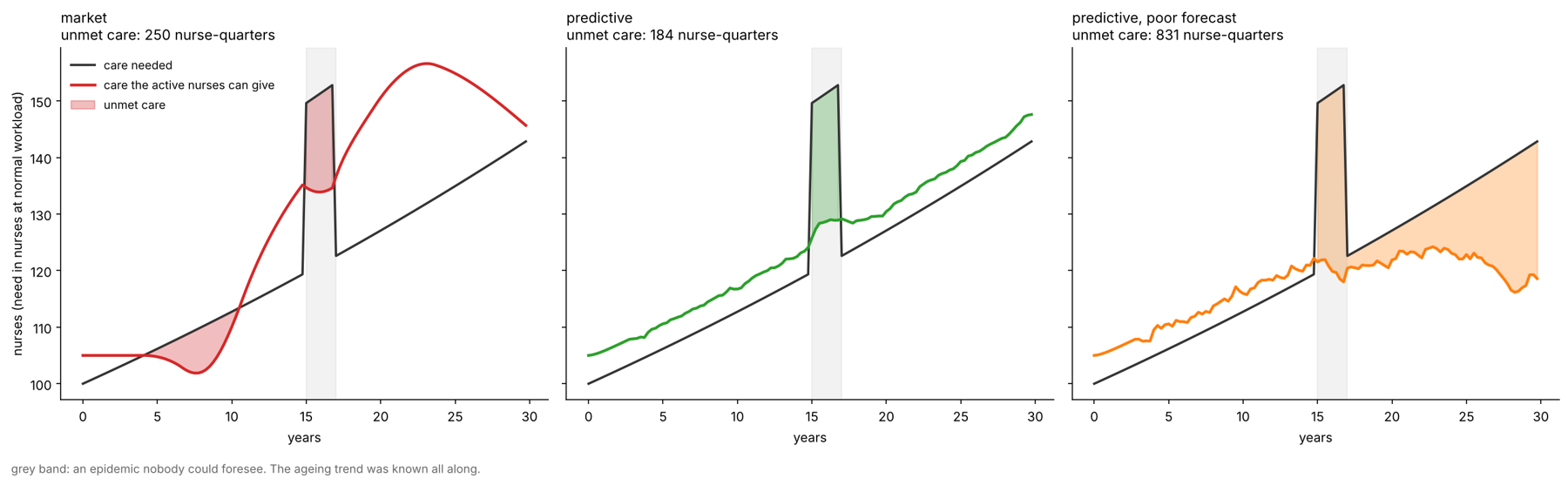
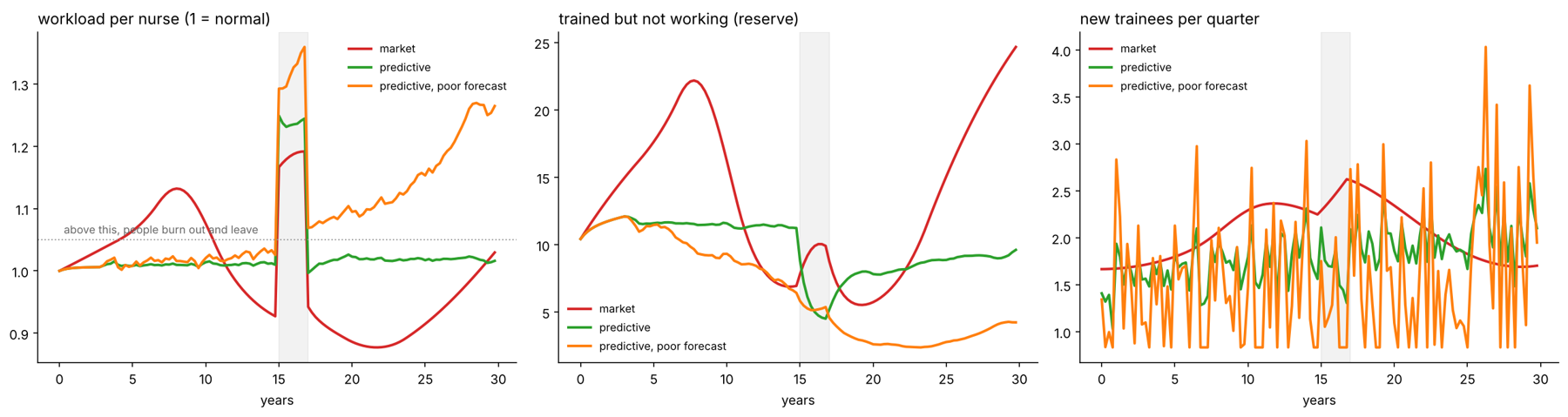
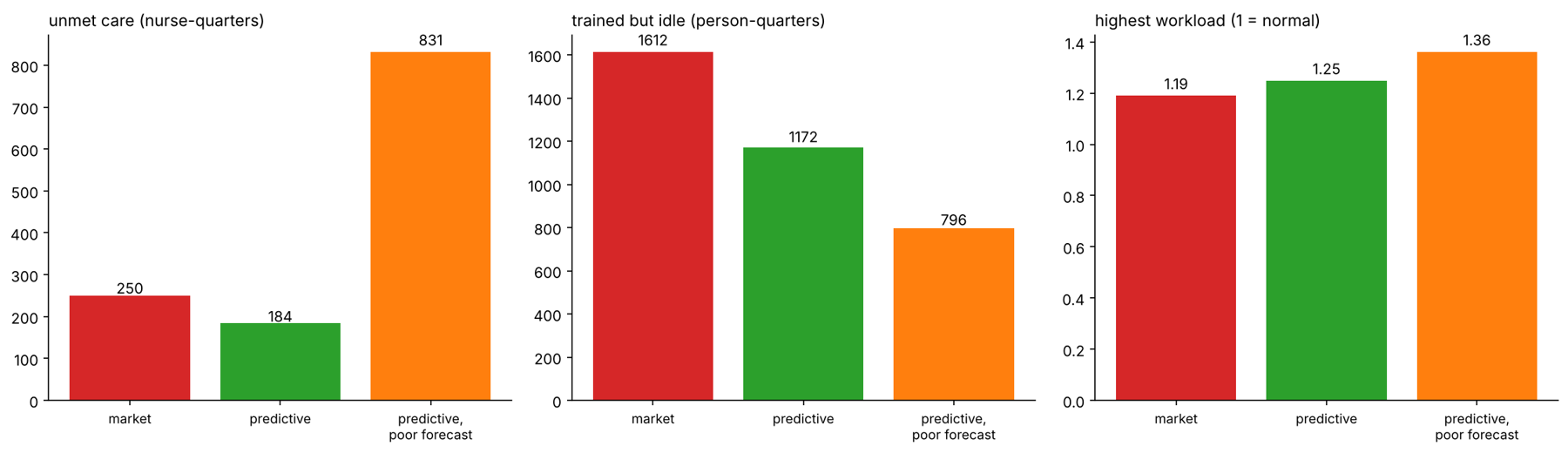
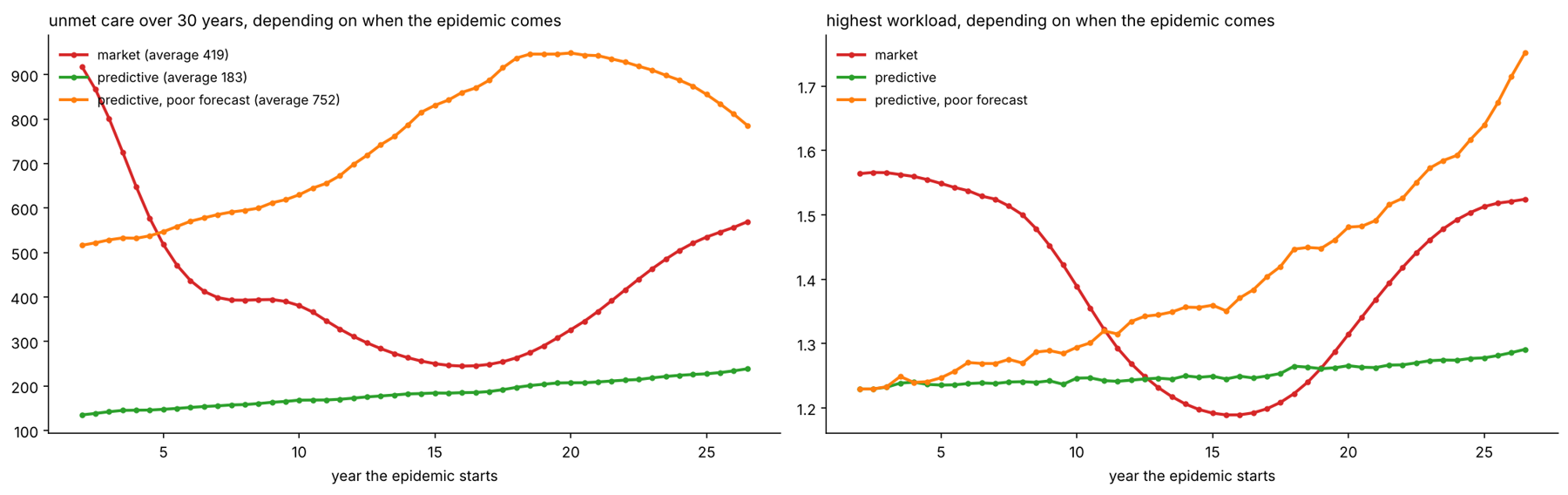
Because a single epidemic might come at a lucky or unlucky time, it is moved to every possible time. Averaged over all of them, the market leaves 419 units of care unmet, the predictive system 183. With a poor forecast, the predictive system does worse than the market, at 752: planning ahead is only as good as the communication of what is needed. The market also keeps many trained people idle.
Without education and resilience, people build means that care only for themselves. They don't see how dangerous the structures needed to shut others out are.