Goals · 4
Reducing hurt
Goal: reduce hurt.
An action that works against what a person wants hurts them (see Foundations). This article looks at one source of hurt: persons who want to hurt others, and the system we use against them.
A society that lives on
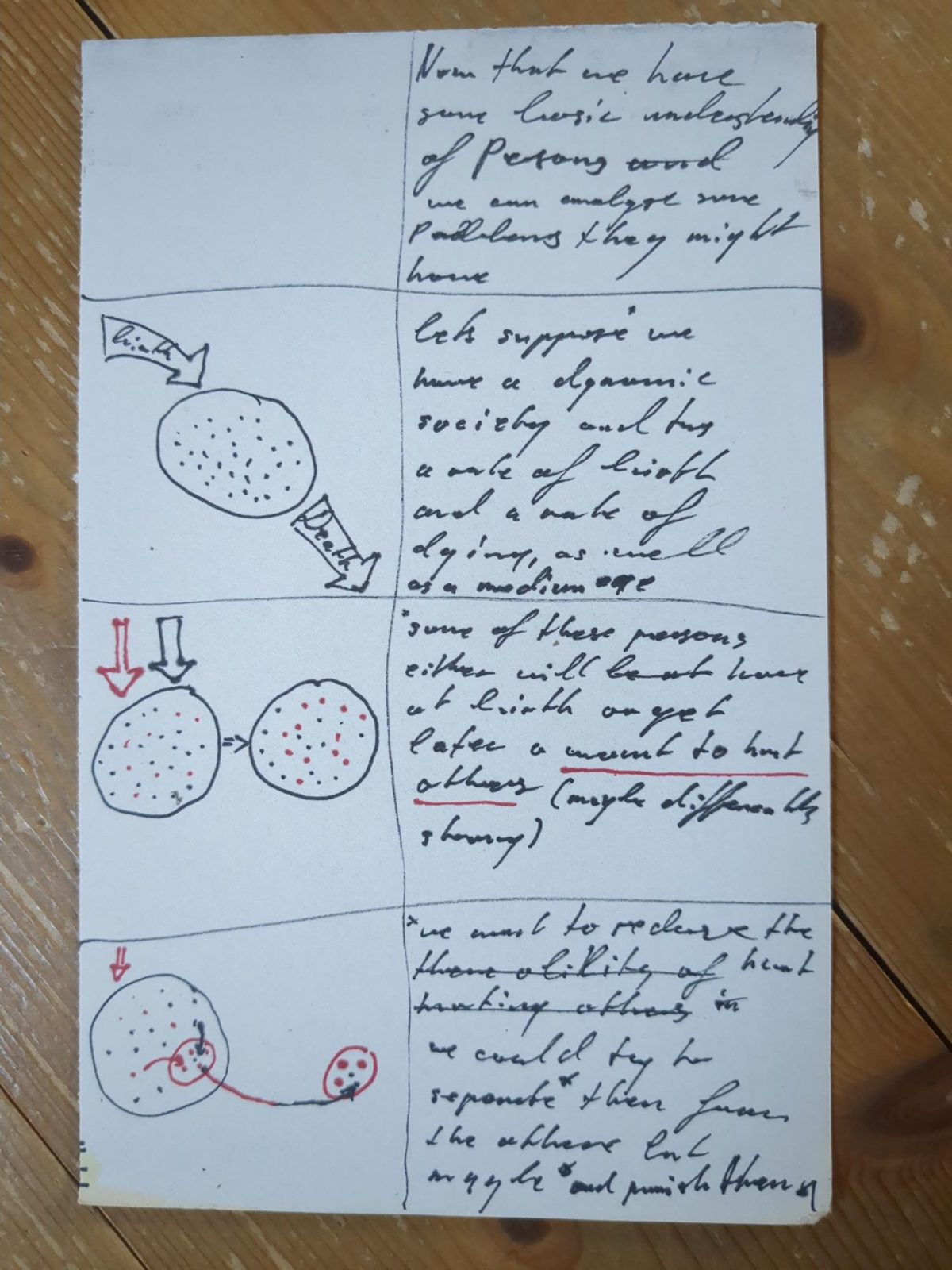
A society is dynamic: people are born and die.
Some persons have a want to hurt, from birth or acquired later, at different strengths. A want to hurt is a want for actions that work against what others want.
One way to reduce hurt is a punitive system: it detects those who hurt, separates them from others, and maybe punishes them.
What punishment does besides
Punishment hurts those who care about the punished person.
Detection and punishment can be flawed.
Innocent people fear being wrongly punished.
That fear can be used to force others into hurting. Someone who wants to hurt can threaten others with it.
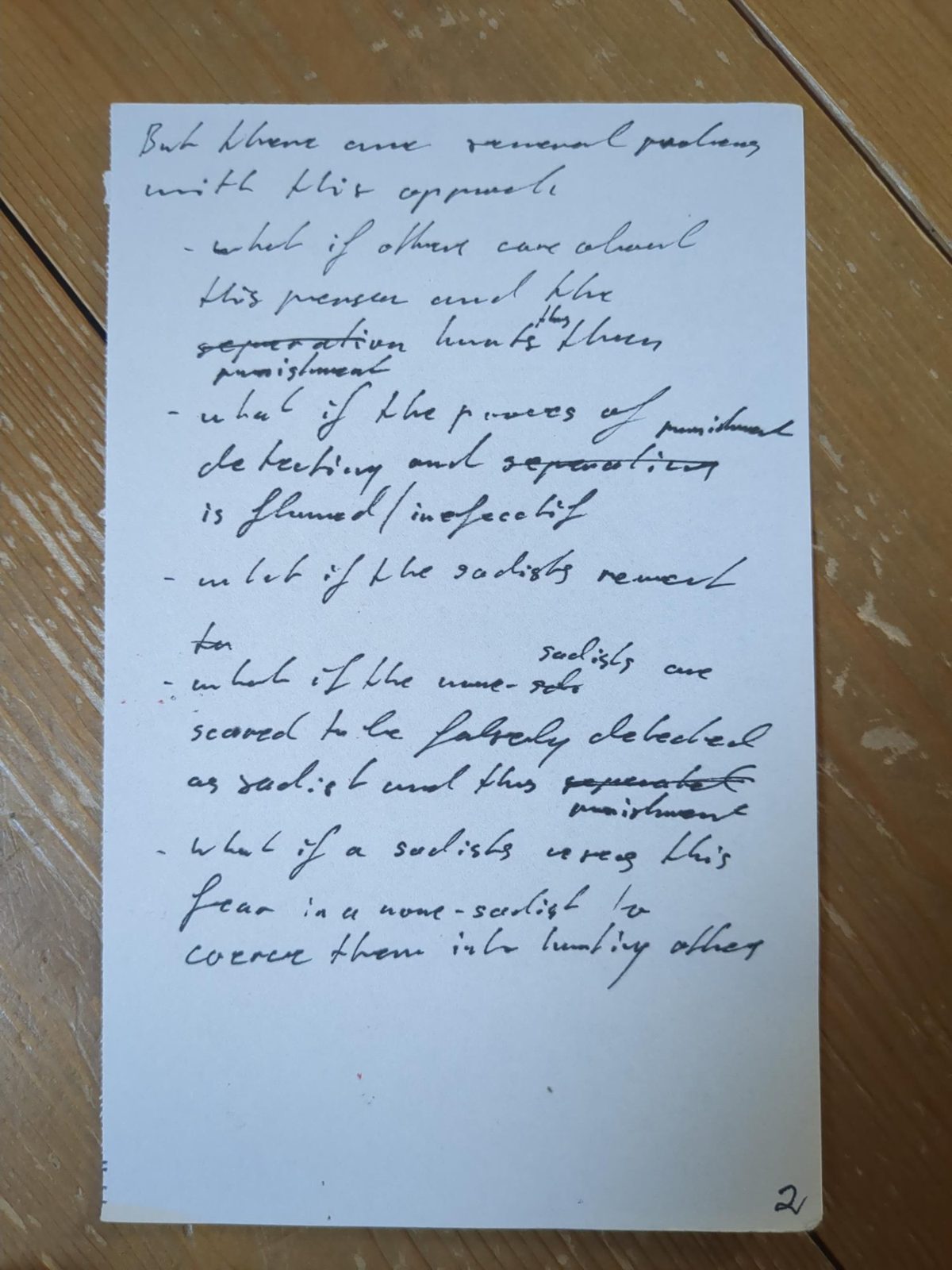
Being hurt, including being punished, can create or strengthen a want to hurt.
Only reacting
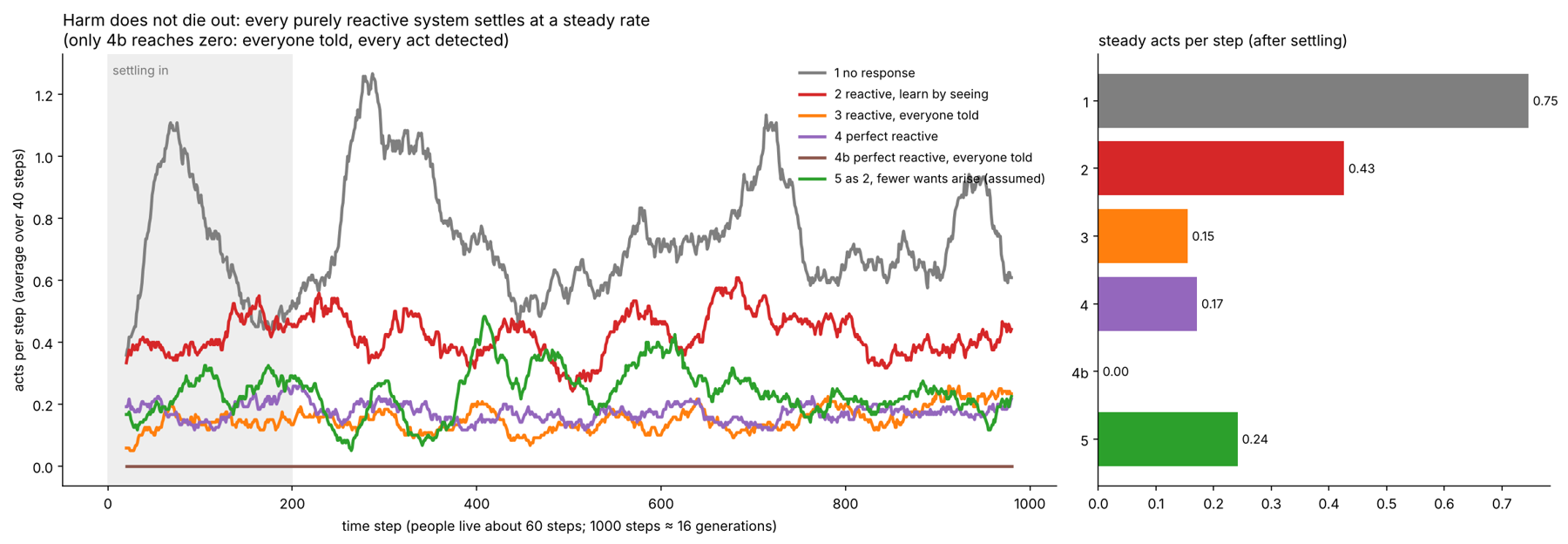
A punitive system is reactive. It acts only after harm is done, and only if the harm is detected. In a dynamic society, where wants to hurt keep arising, it leaves a steady rate of harm. Punishing can only shorten how long each want to hurt is acted on; it doesn't touch how many new ones arise.
Illustration: shows what follows from these assumptions; not evidence.
In the model, the harm settles at a level that roughly equals the number of new wants to hurt times the number of acts each does before being stopped. A perfect reactive system, where every act is detected and every offender separated for good, still leaves a steady rate of harm, and causes more hurt than any other system in the model, mostly through the separation itself and its effect on those who care. Only when, in addition, every newcomer is told before they could do harm, and no act can be hidden, does harm reach zero.
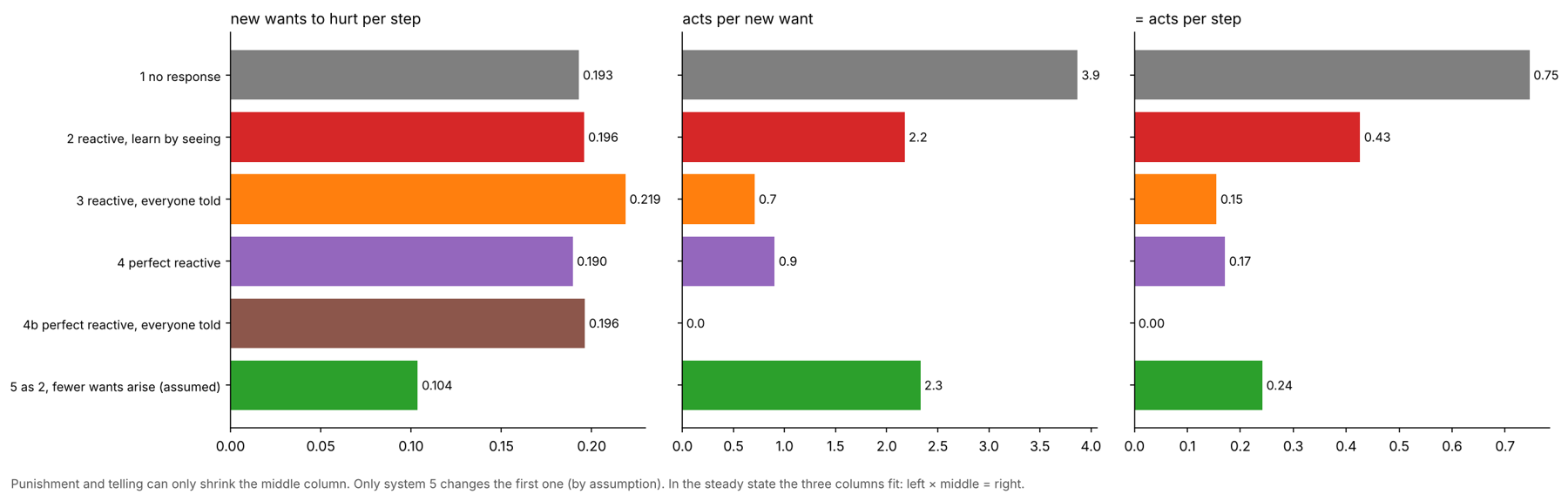
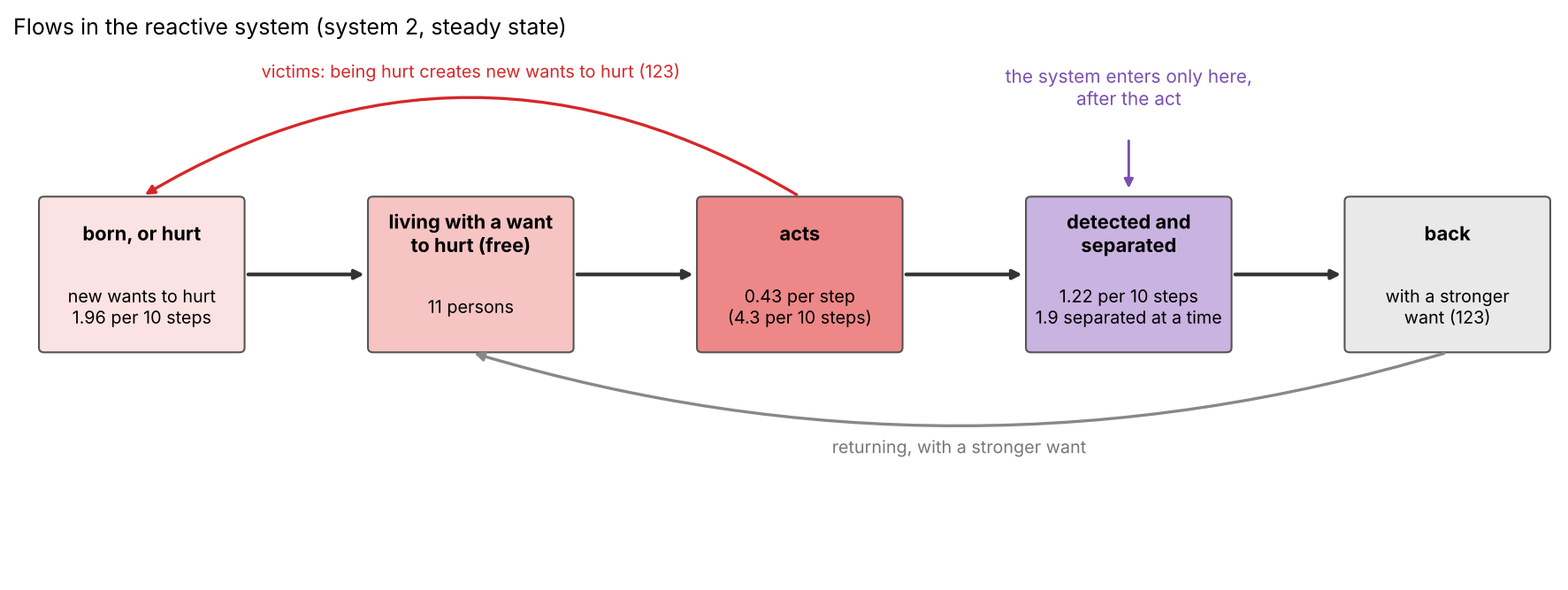
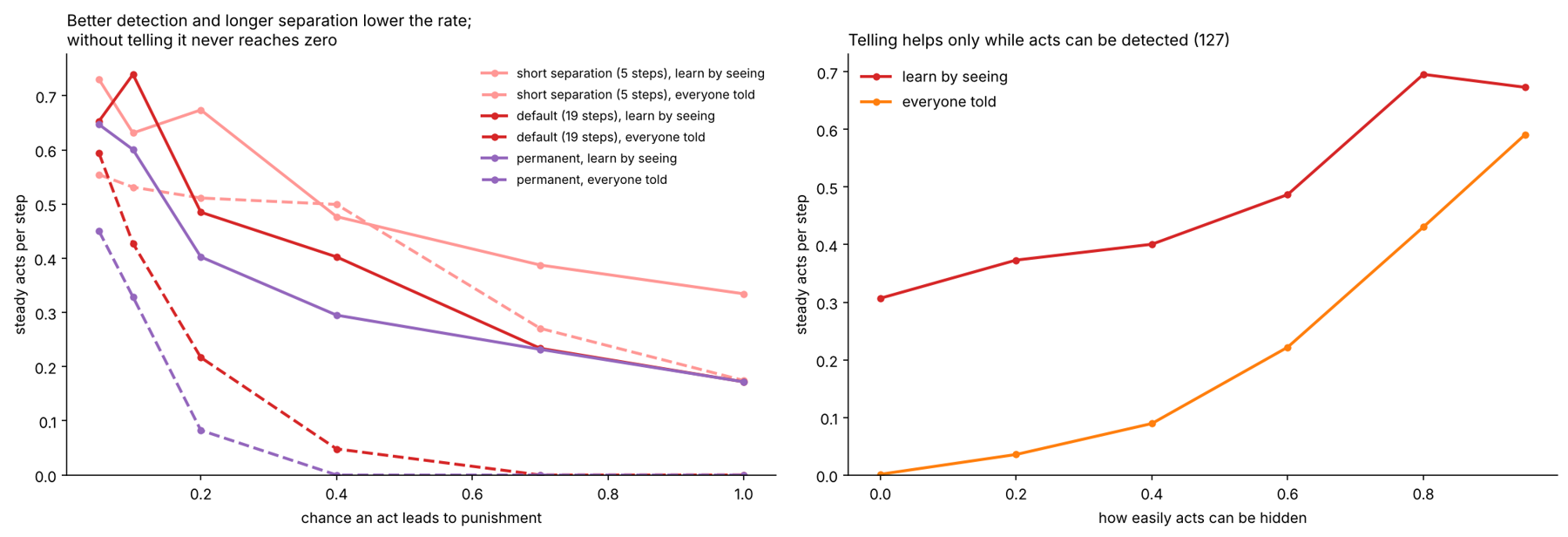
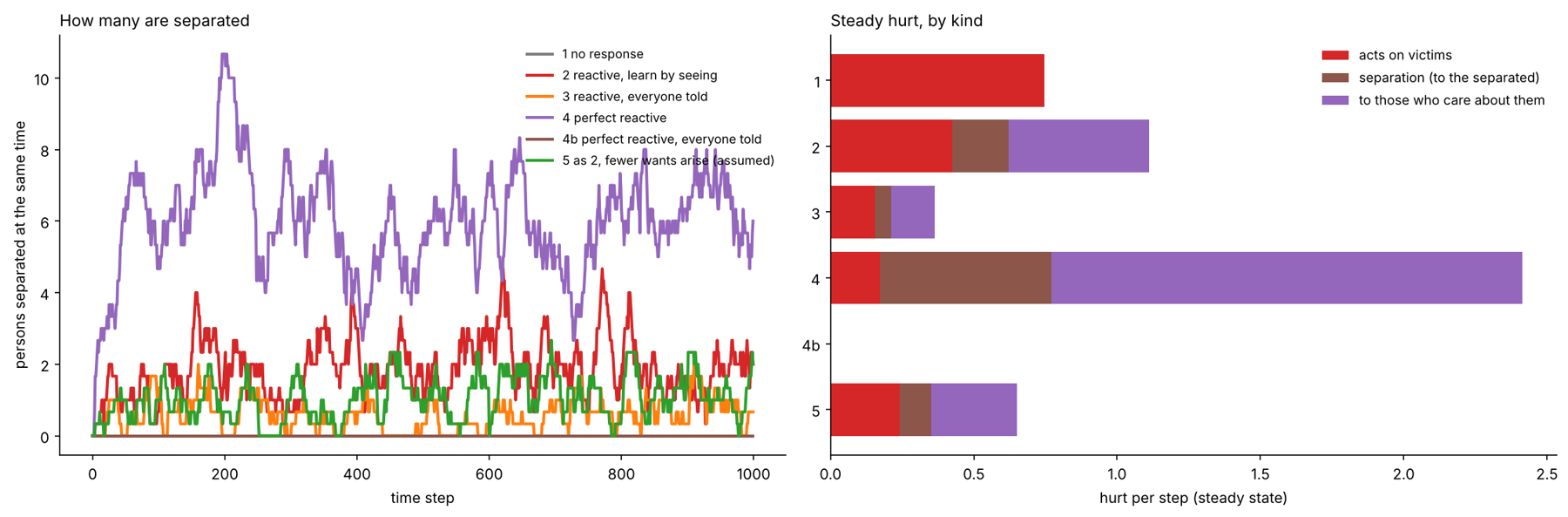
All numbers are illustrative. How the kinds of hurt are weighed against each other is a value judgement, so they are always shown split. Hiding, silence and coercion are left out here, which favours the punitive side. The zero in the best case depends on nobody wanting to hurt more strongly than any punishment can deter.
Deterrence works only through a belief every newcomer must form before being able to do harm, so its preventive part is teaching. Deterrence is holding back an act because of its expected consequence. It works before the act, but only through what a person believes about the consequence.
Deterrence works only as far as acts can be detected. Acts that can be hidden are not deterred.
For many harmful acts, the circumstances in which they arise are known. These are economic and social circumstances, and they could be changed.
Illustration: shows what follows from these assumptions; not evidence.
In the reactive model, one comparison simply assumes that half as many wants to hurt arise. That alone lowers harm from 0.43 to 0.24 acts per step, close to what perfect detection with permanent separation achieves (0.17), and without the hurt that separation brings.
Harsher punishment
A society is connected through care if between any two persons there is a chain of people caring for each other.
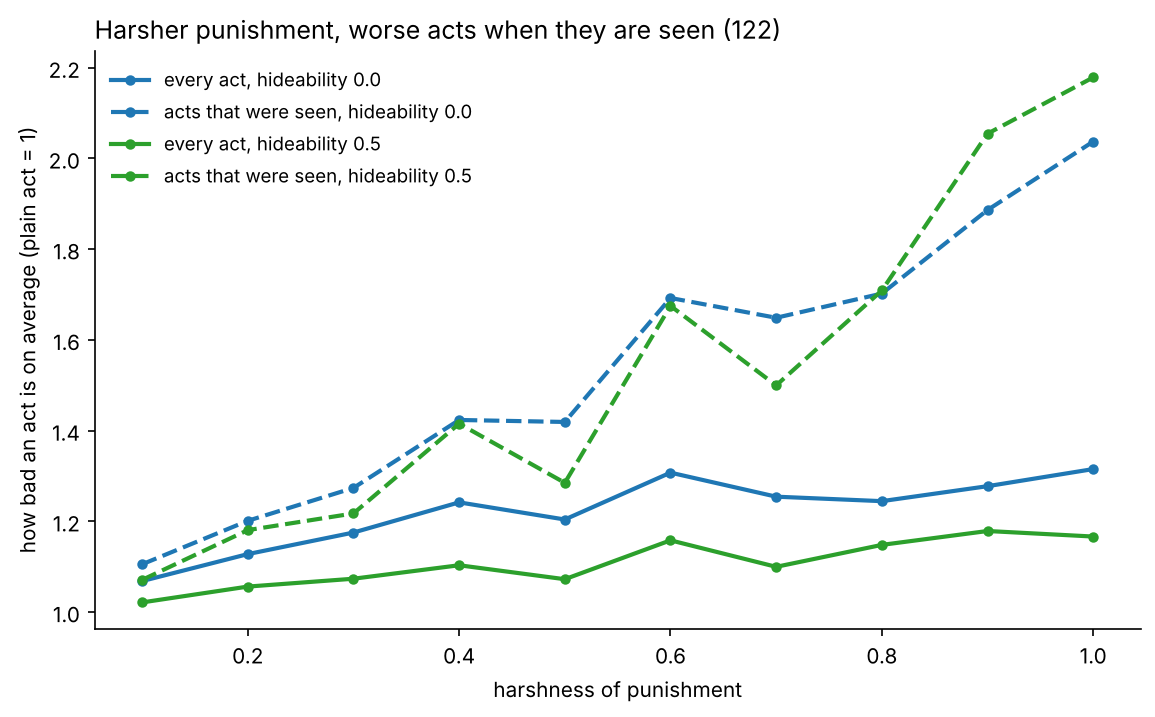
The harsher the punishment, the worse an act is likely to be when it happens or is seen. A witness may be silenced.
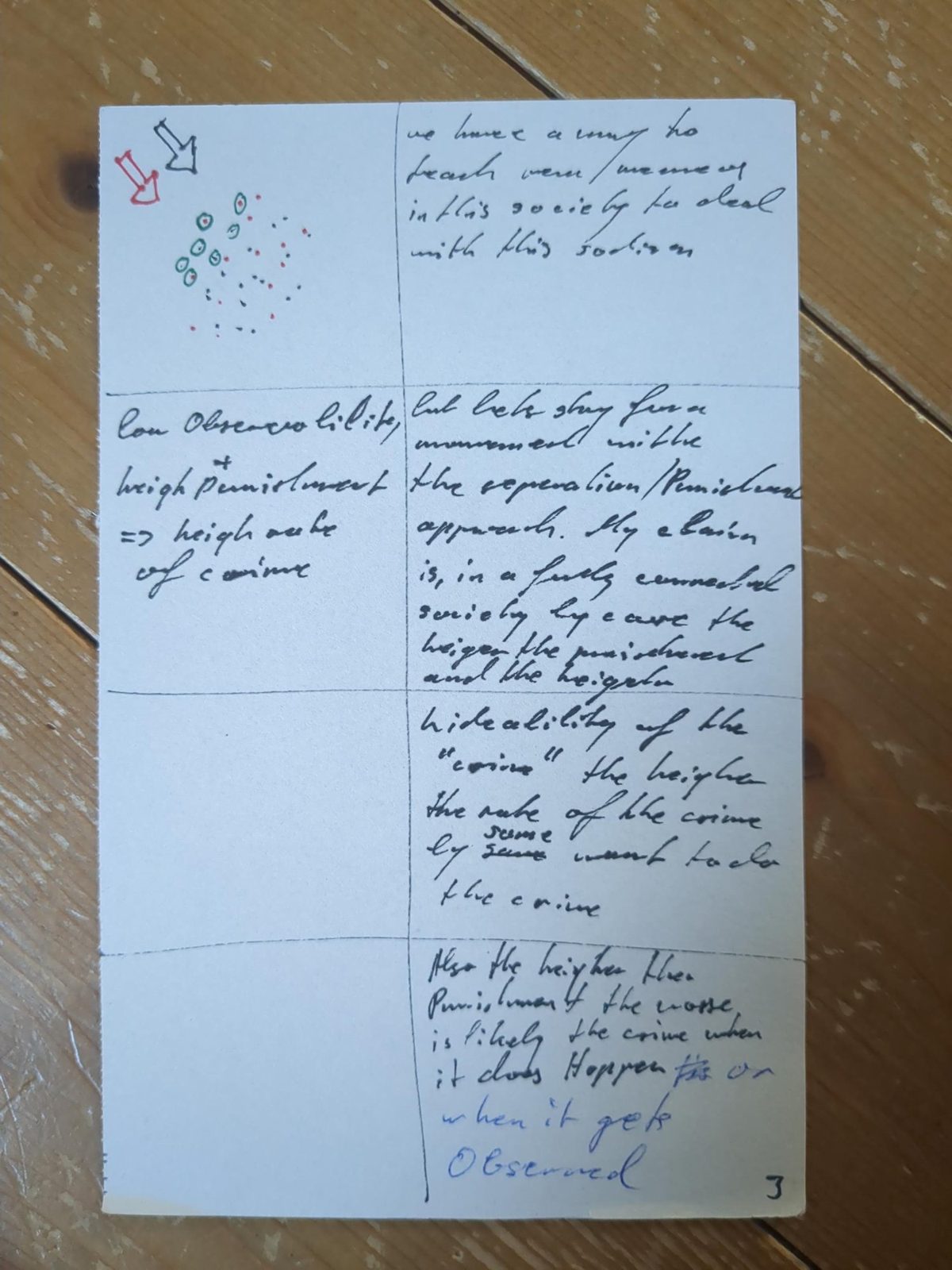
Illustration: shows what follows from these assumptions; not evidence.
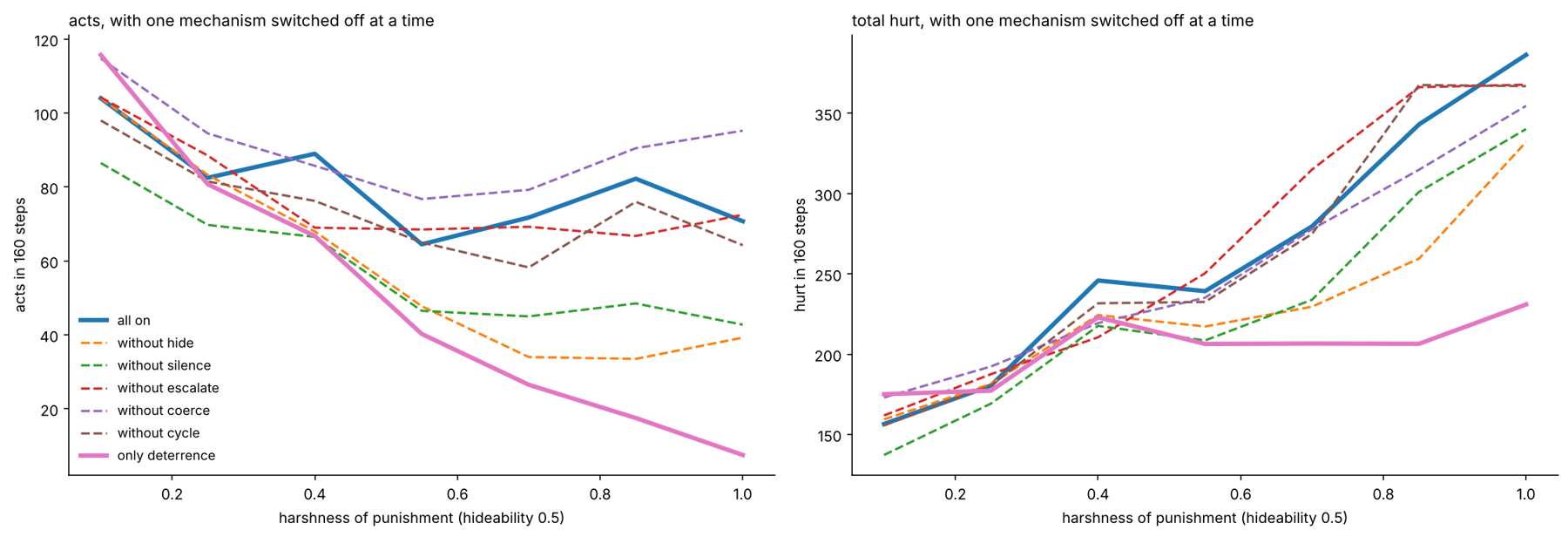
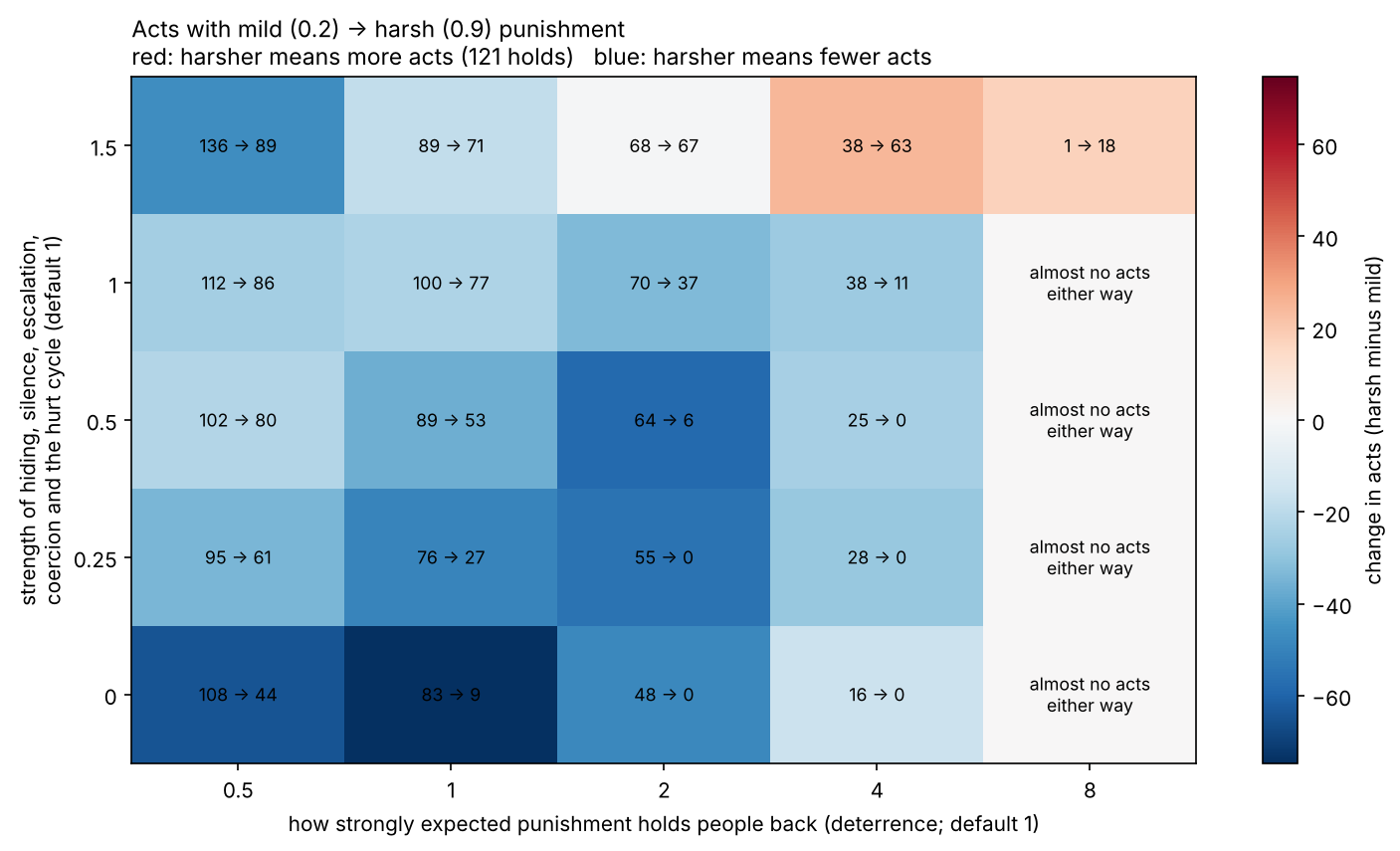
A first model has about 300 persons and a caring network, people born and dying, and a want to hurt that some are born with and others acquire by being hurt, including by being punished. Harsher punishment makes people hide their acts better, makes those who care report less, can turn a seen act into a worse one, and gives coercion more force.
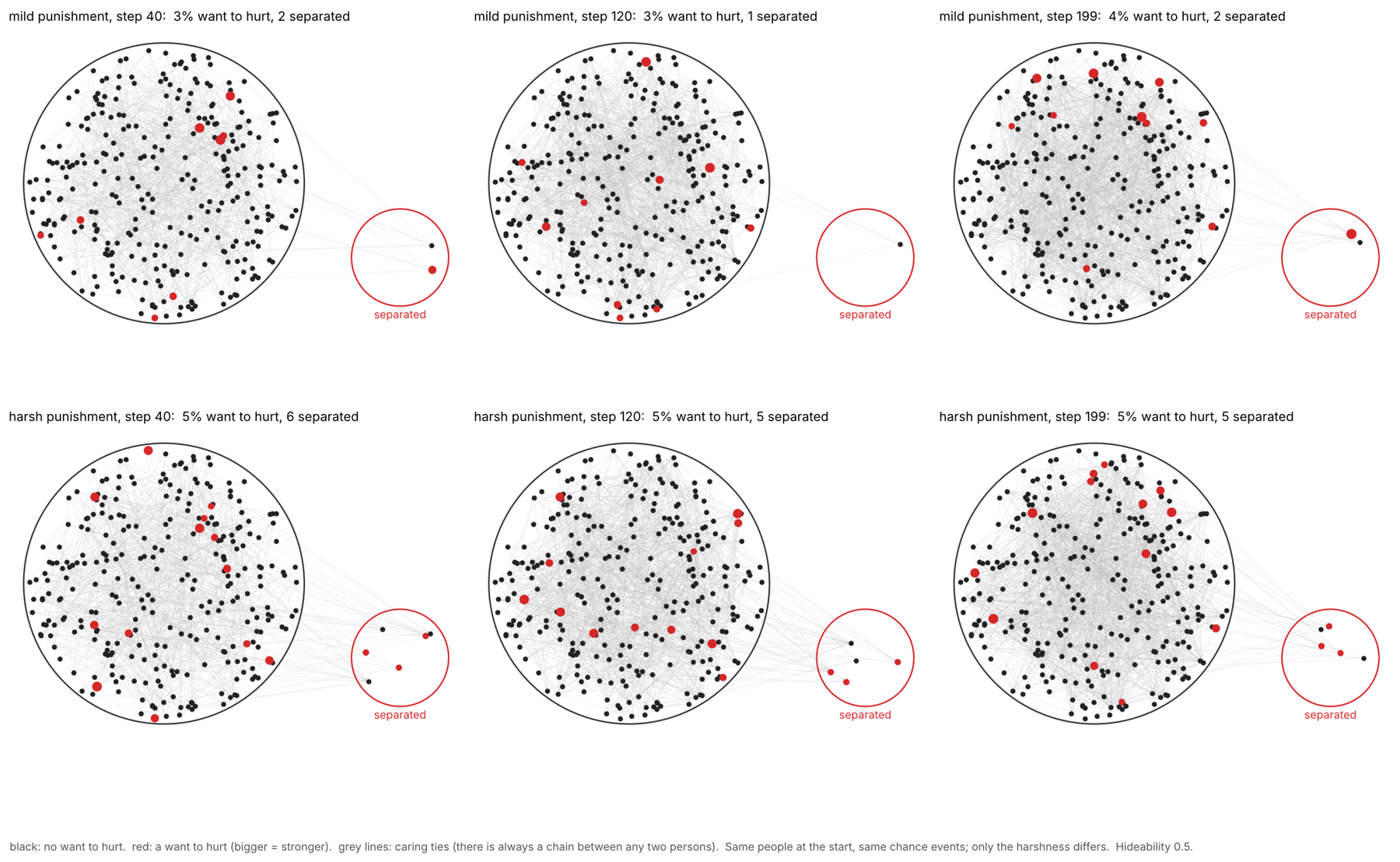
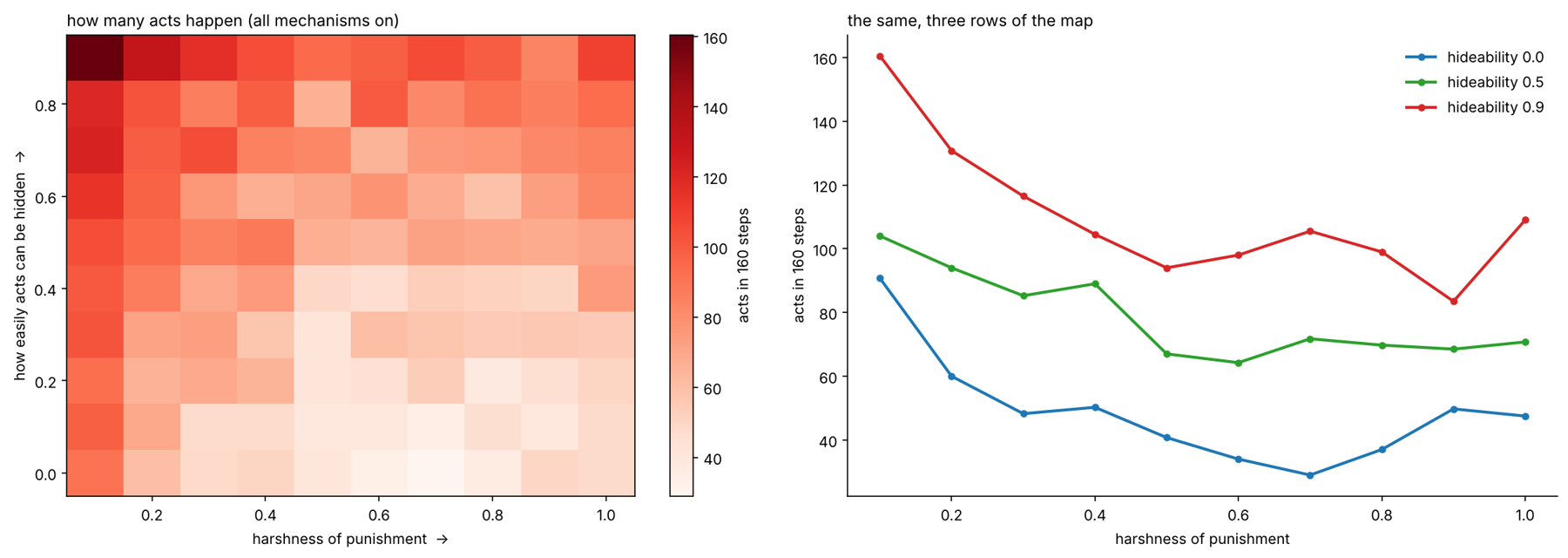
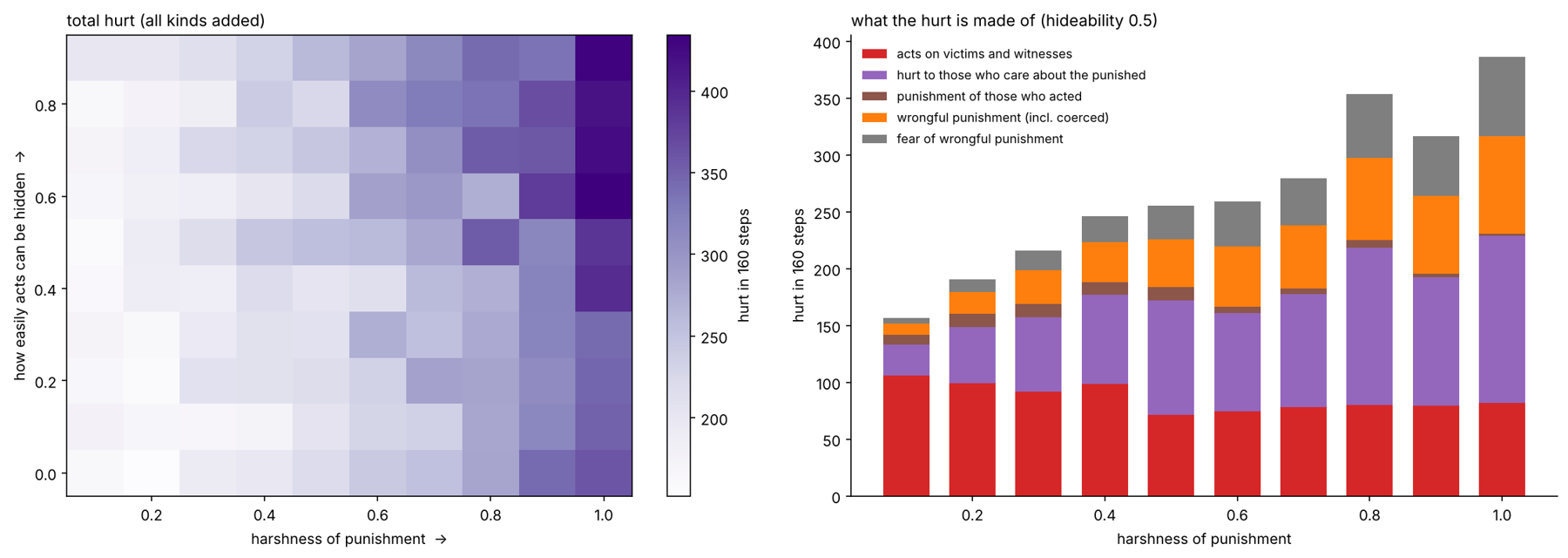
In this model the result is more mixed than the claim in the notebook. Harsher punishment first lowers the number of acts, then they level off. With deterrence alone, acts would keep falling, so hiding, silence and coercion cancel most of what harsher punishment achieves, but not all of it. All hurt added up rises with harshness: harm from acts gets smaller, but hurt to those who care about the punished, wrongful punishment and fear grow more.
Building resilience
Reducing hurt includes building resilience against hurt and manipulation.
Secrecy does not fix coercion. A society is open to coercion because resilience was never built.
Resilience needs experience and tested temptation; talking alone is often not enough. A society never exposed to harm is not resilient against it; it needs something like a vaccination.