Foundations
Foundations
What a person is, in the sense used on this site, and what happens when what they want meets what they believe and what other people want.
Persons and their wants
Persons have the ability to want. That is the starting point for everything on this site. It is not all a person is, but it is the part that matters when a society tries to decide what to do.
Looking closely at what people want, a pattern shows. It can be described by a few properties, each building on the ones before.
Many. A person wants many things at the same time. Wanting one thing does not stop the others being wanted, even when not all can be had together. Someone committing to a relationship still wants their freedom, their friends and a place of their own.
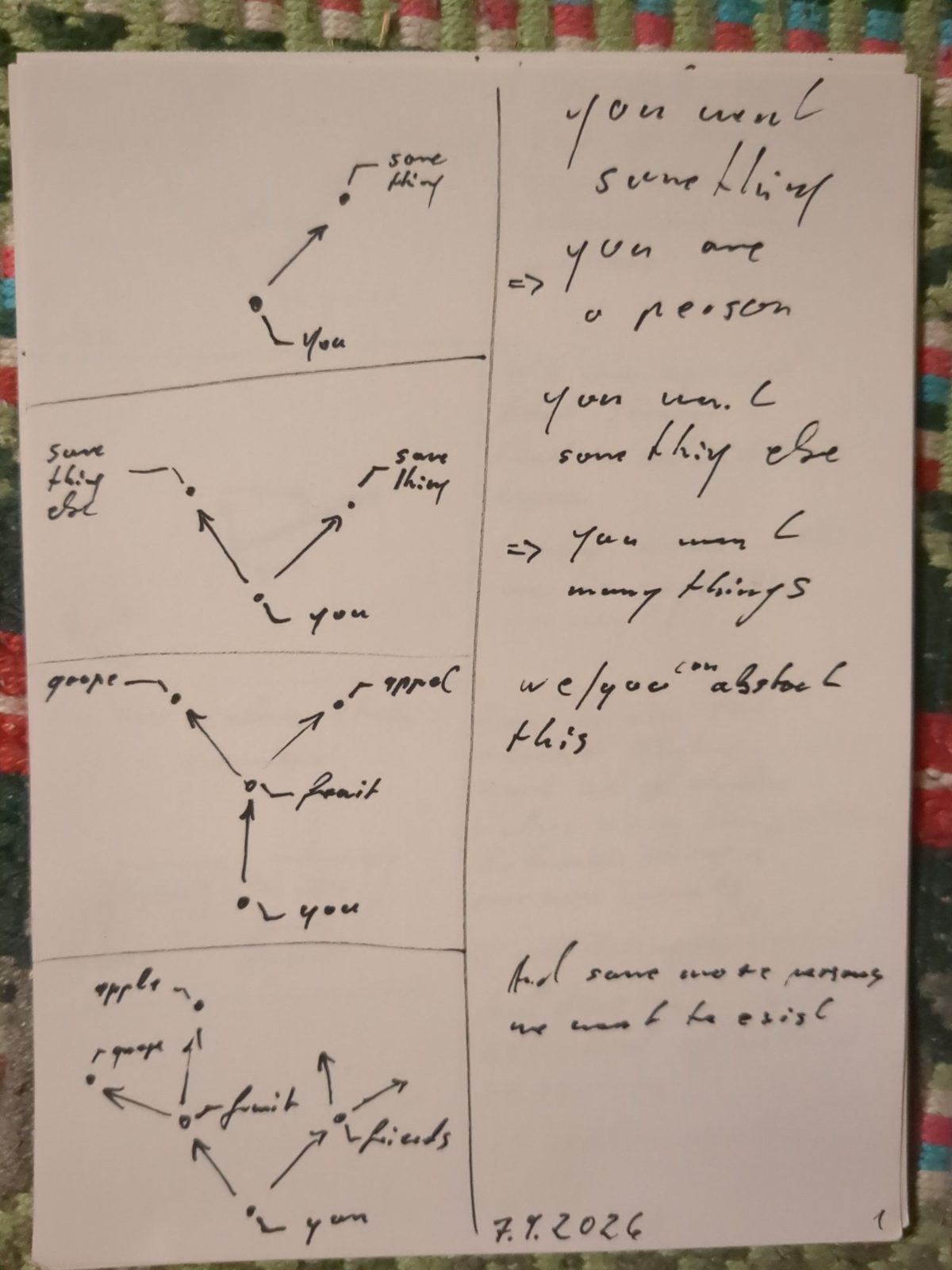
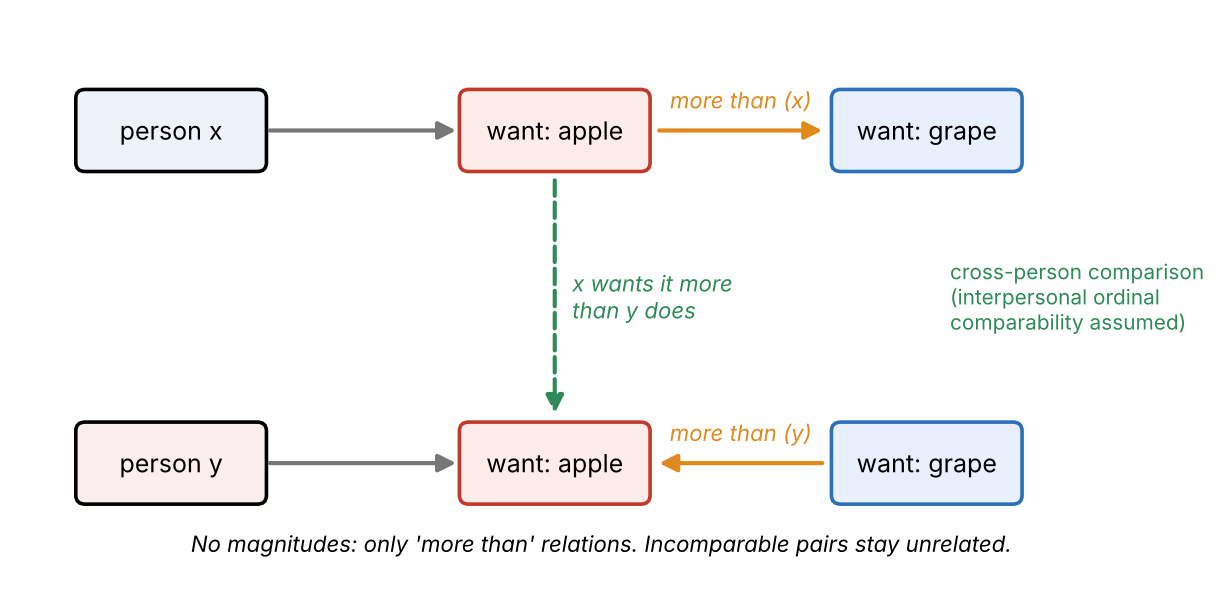
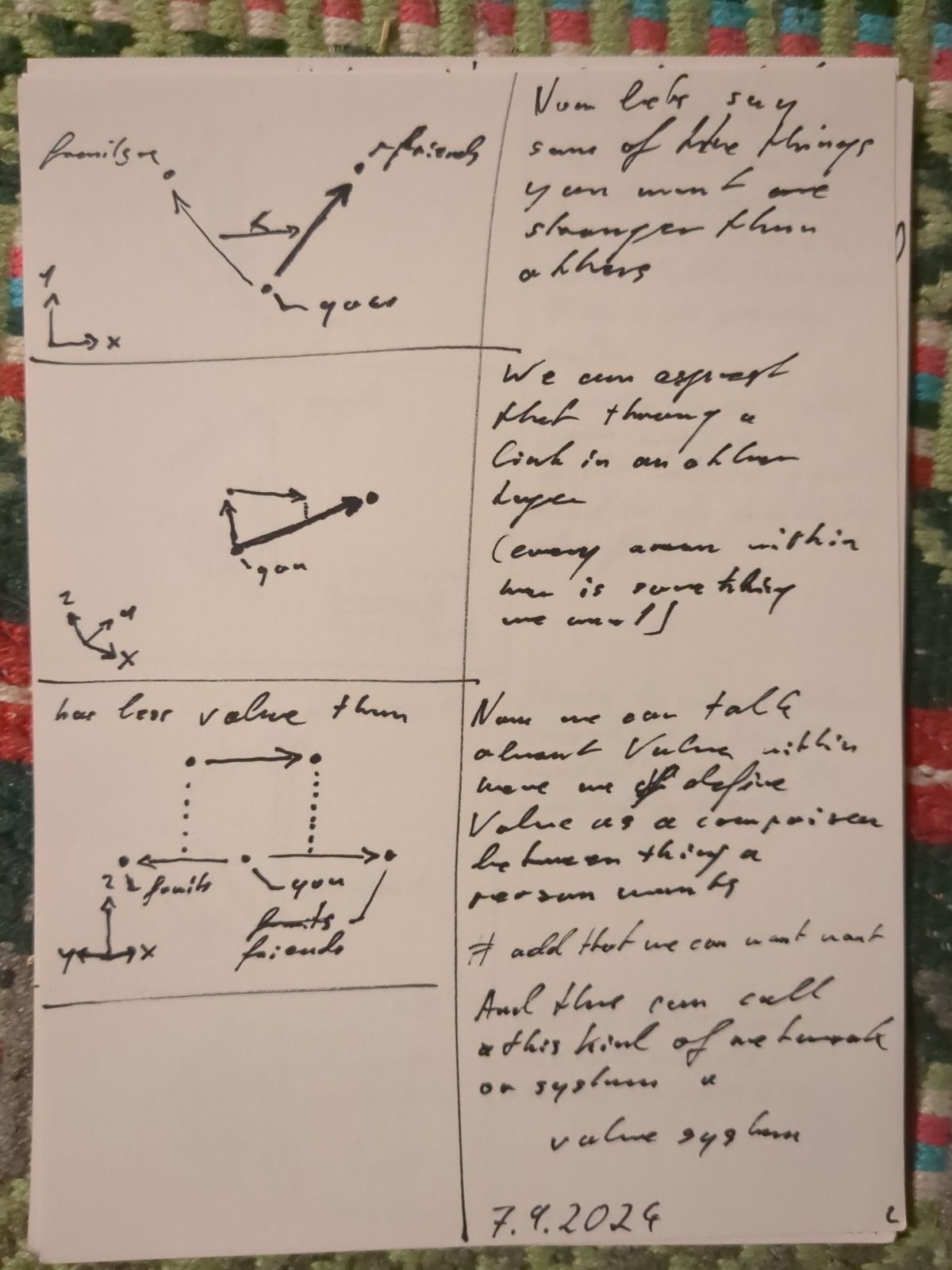
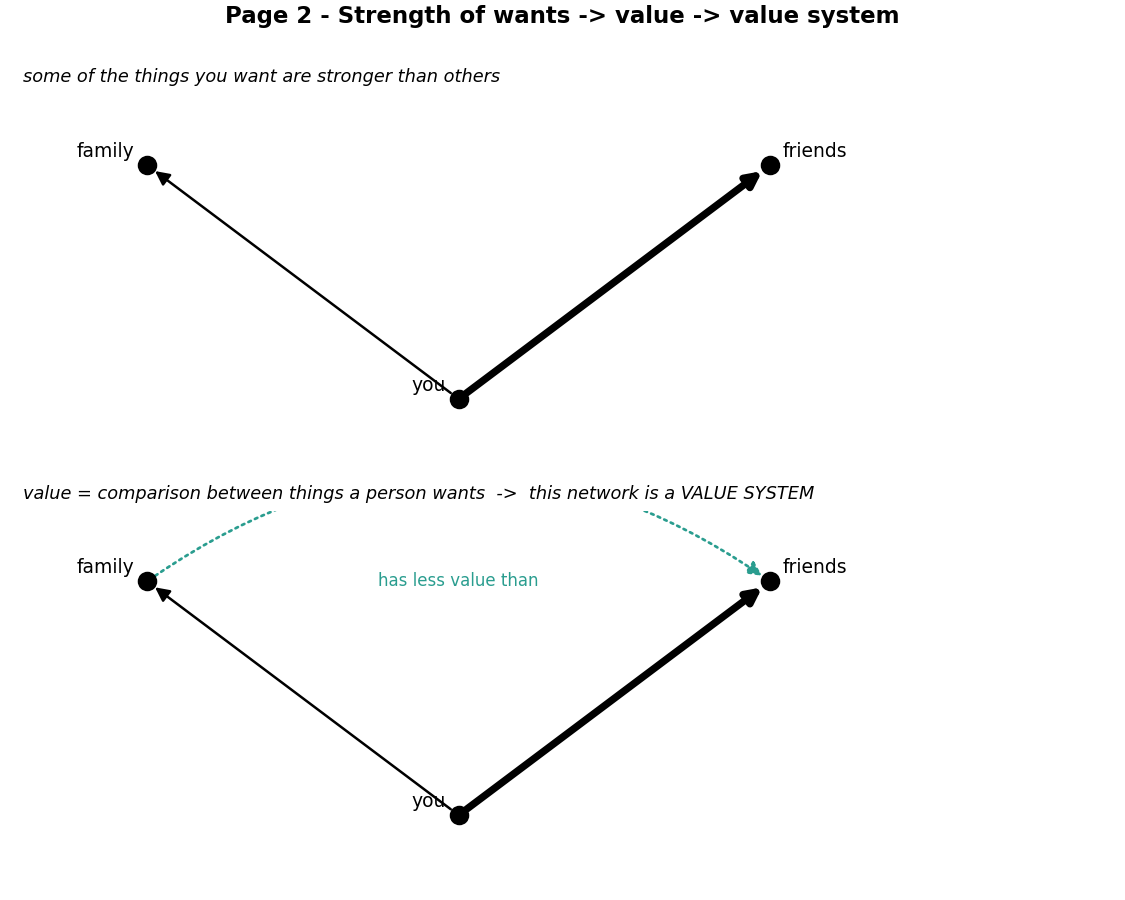
Differently strong. Some things are wanted more than others. But a single want has no strength on its own. Strength only shows when a want is compared: with another want, with another time, or with another person. People compare; they don't measure. Treating wants as amounts misses how people work. A friendship may matter more to you than it did a year ago, and more to you than it does to your friend.
Contradictory. A person can want something and not want it at the same time. This is not two wants pulling apart, but the same thing, wanted and not wanted at once. So the usual assumption, that you either want something or you don't, is wrong. Parents want their child to leave home, and they want them to stay.
Dependent. Wants depend on other persons, on circumstances, and on the consequences we expect. They also depend on the person's other properties: on other wants, on beliefs, on trust and on fears. Whether you want to commit to someone depends on whether they want it too, and on whether you trust that it will last.
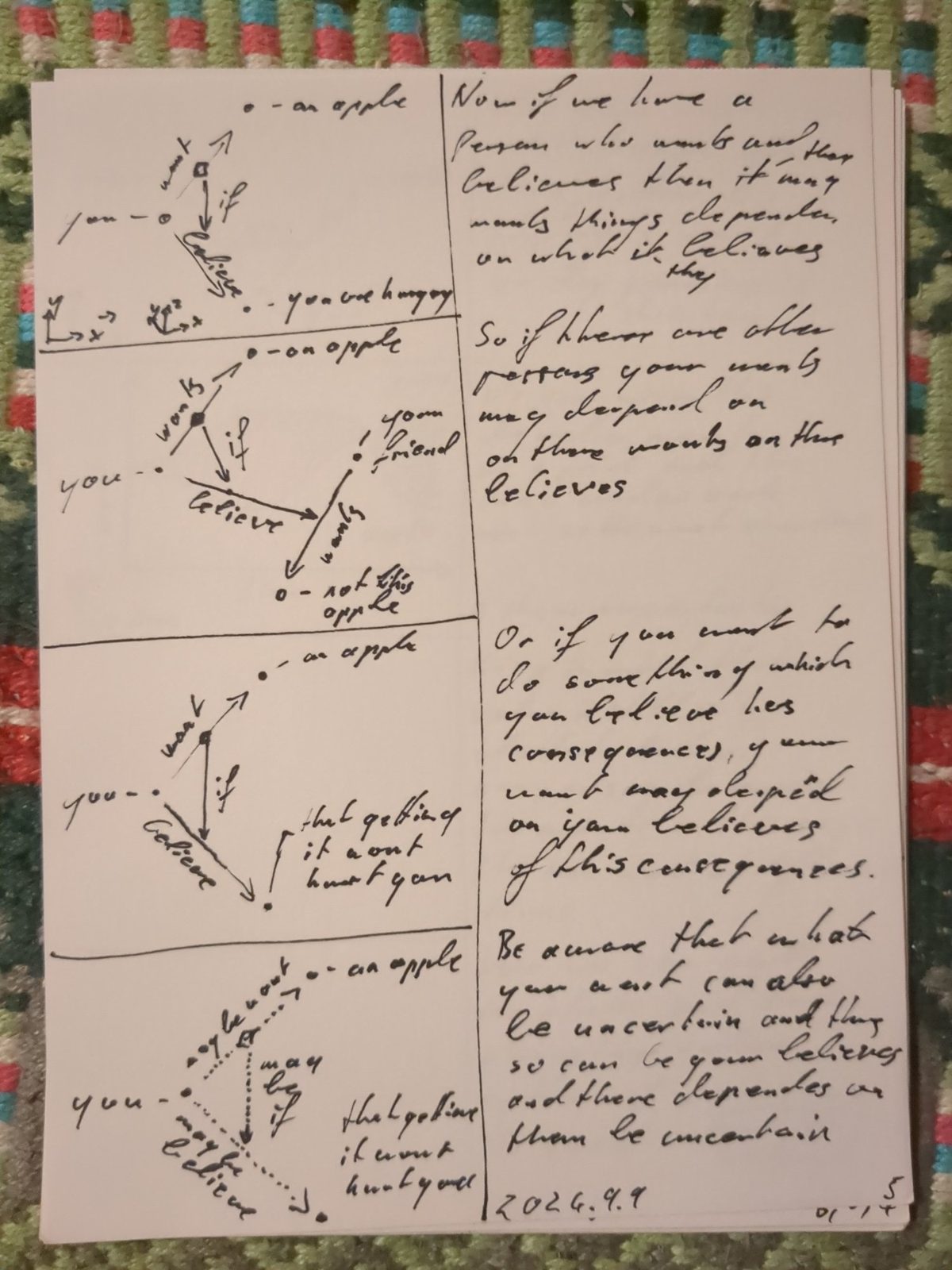
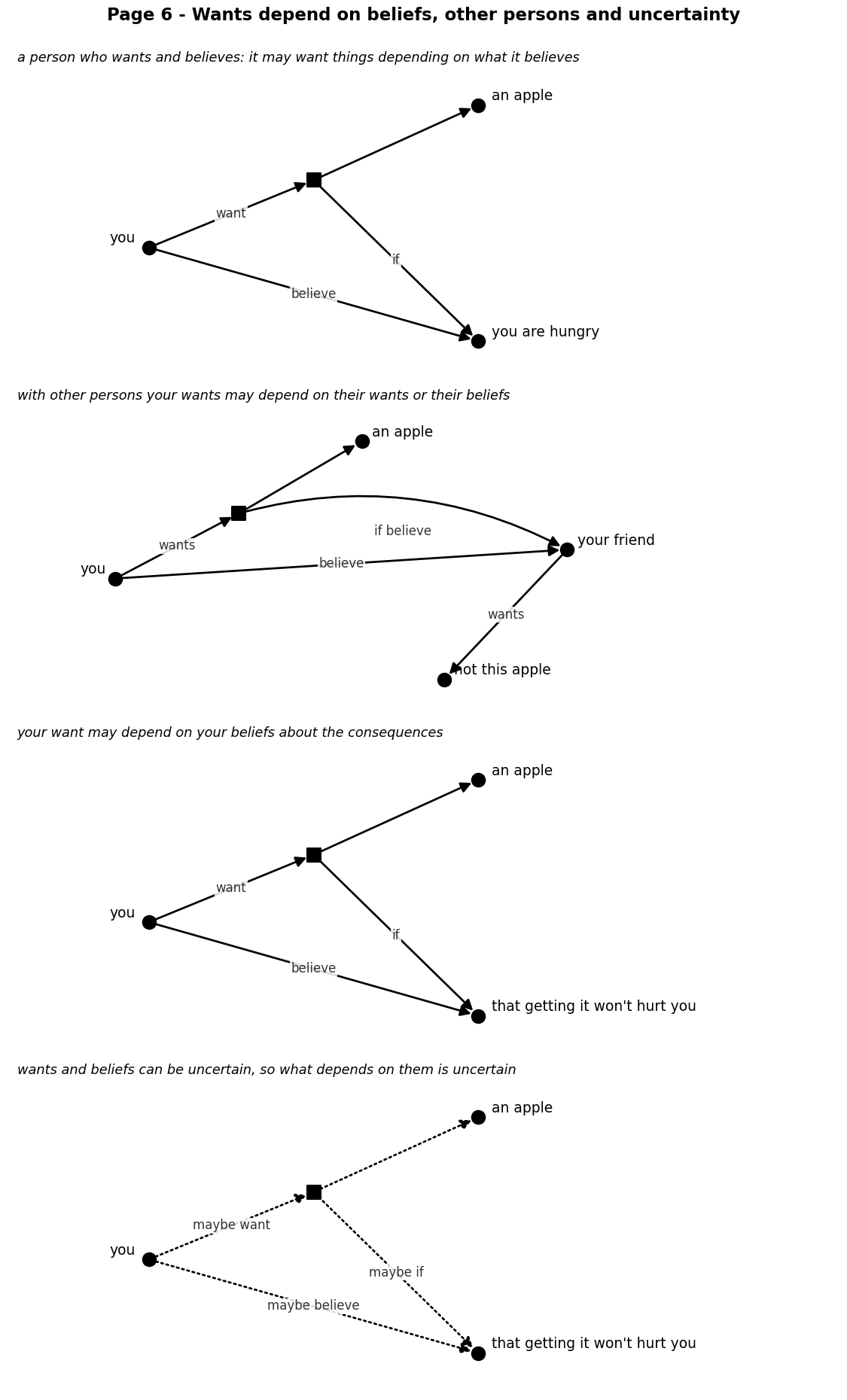
Uncertain. Each of these can be uncertain. A comparison can be uncertain, a dependency can be uncertain, and sometimes it is unclear whether something is wanted at all. Someone returning home after many years may not know whether they want to belong there again.
Layered. There are wants about wants, and comparisons of comparisons. Each layer builds on the one below. Wanting to be someone who keeps their promises is a want about wants.
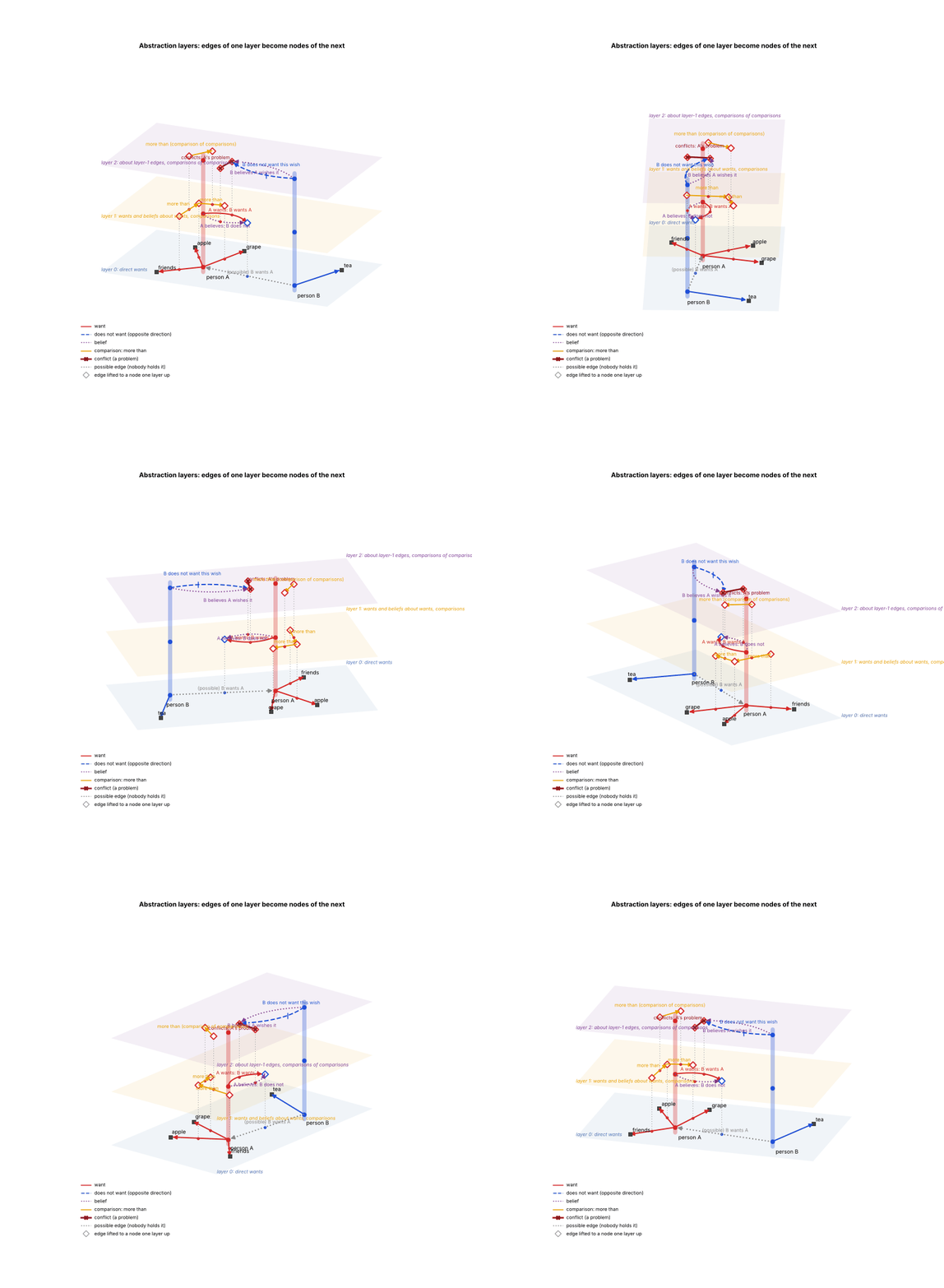
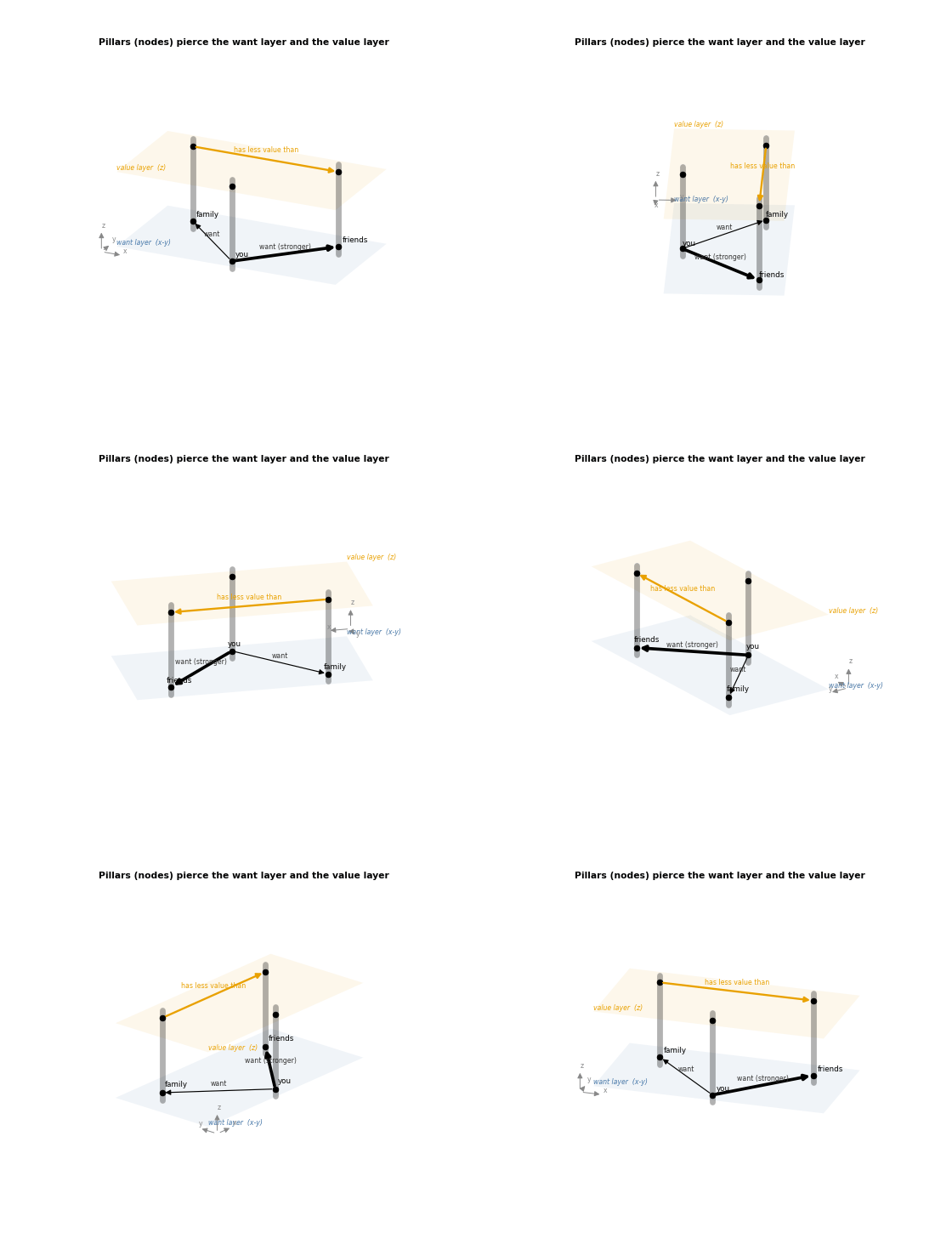
Changing. All of this changes over time, some of it slowly, some quickly: how many things are wanted, how strongly, what contradicts what, what wants depend on, how sure one is, and which layers matter. Committing to someone means something different at twenty than at forty.
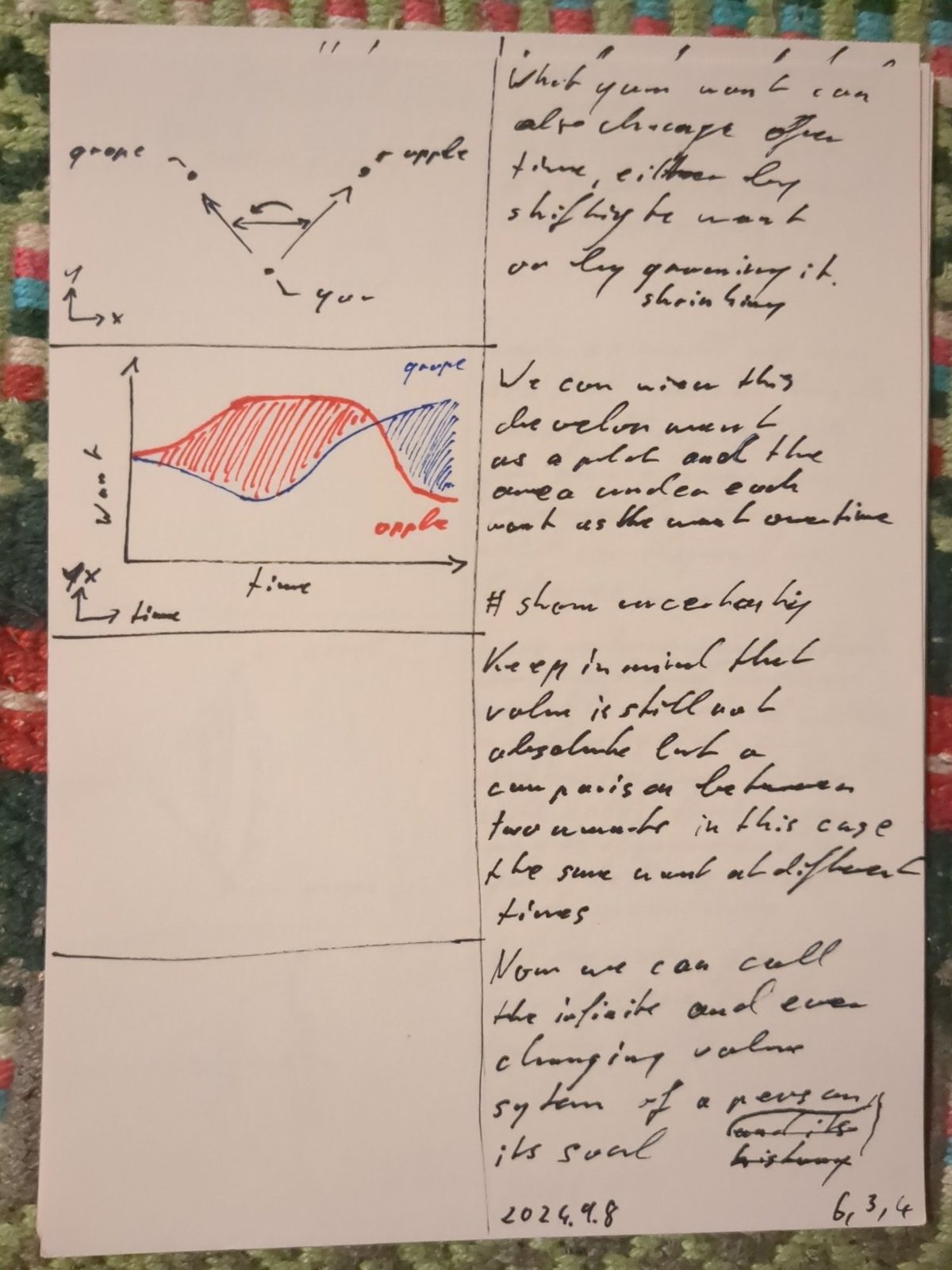
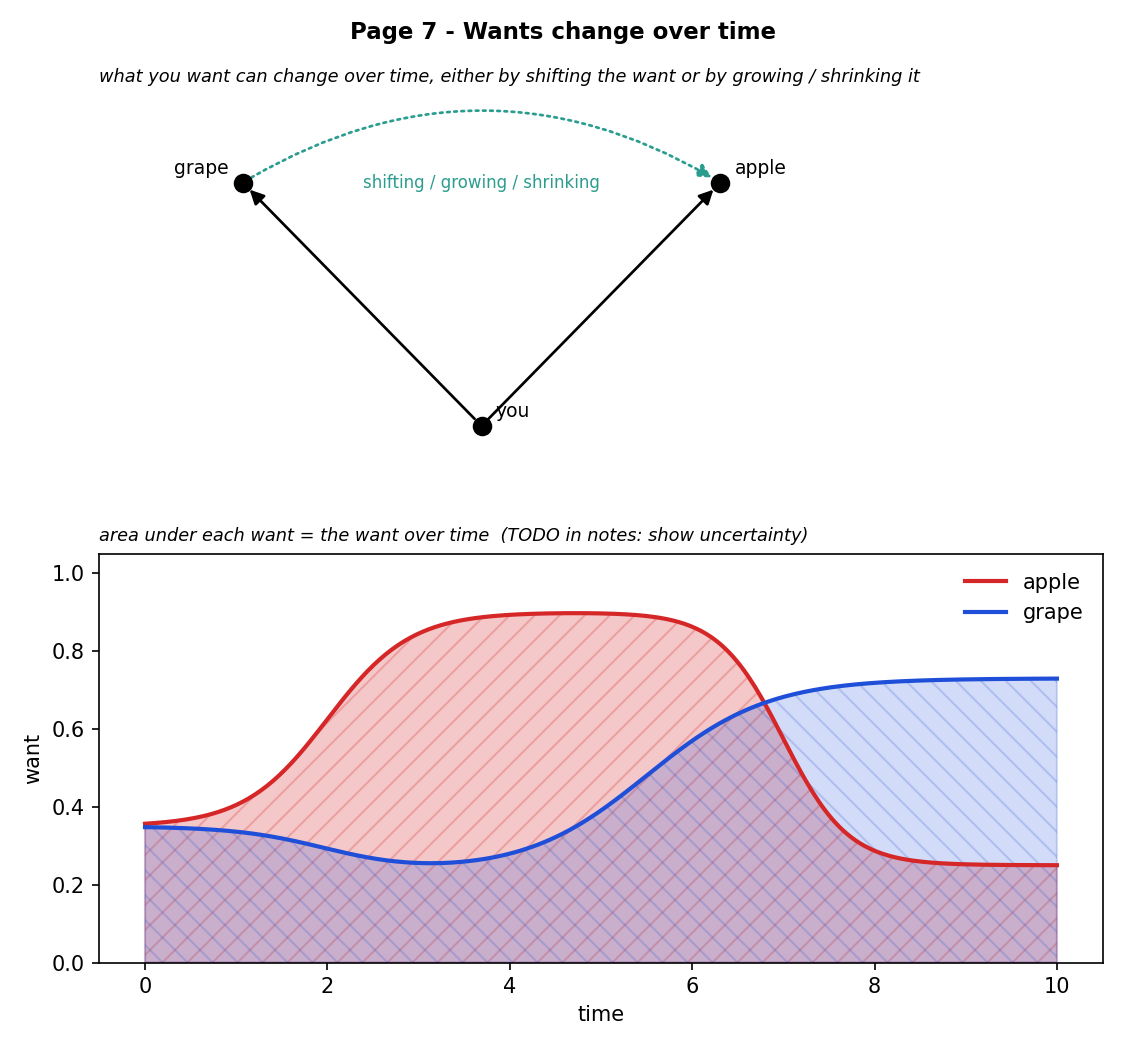
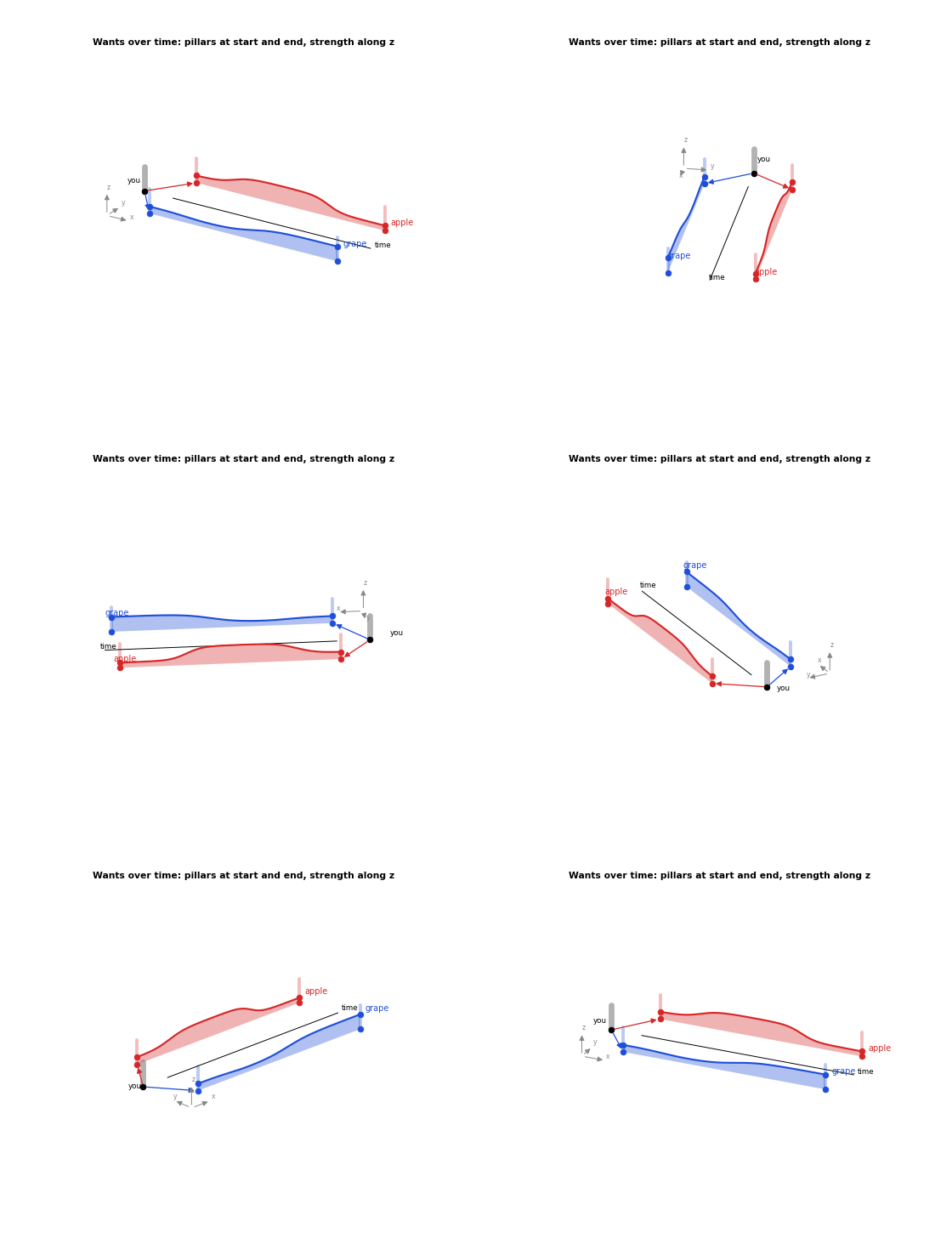
Together, these properties are what this site calls complex. Calling wants complex is not a way of saying they are complicated or confused. It names this particular structure.
Good and better
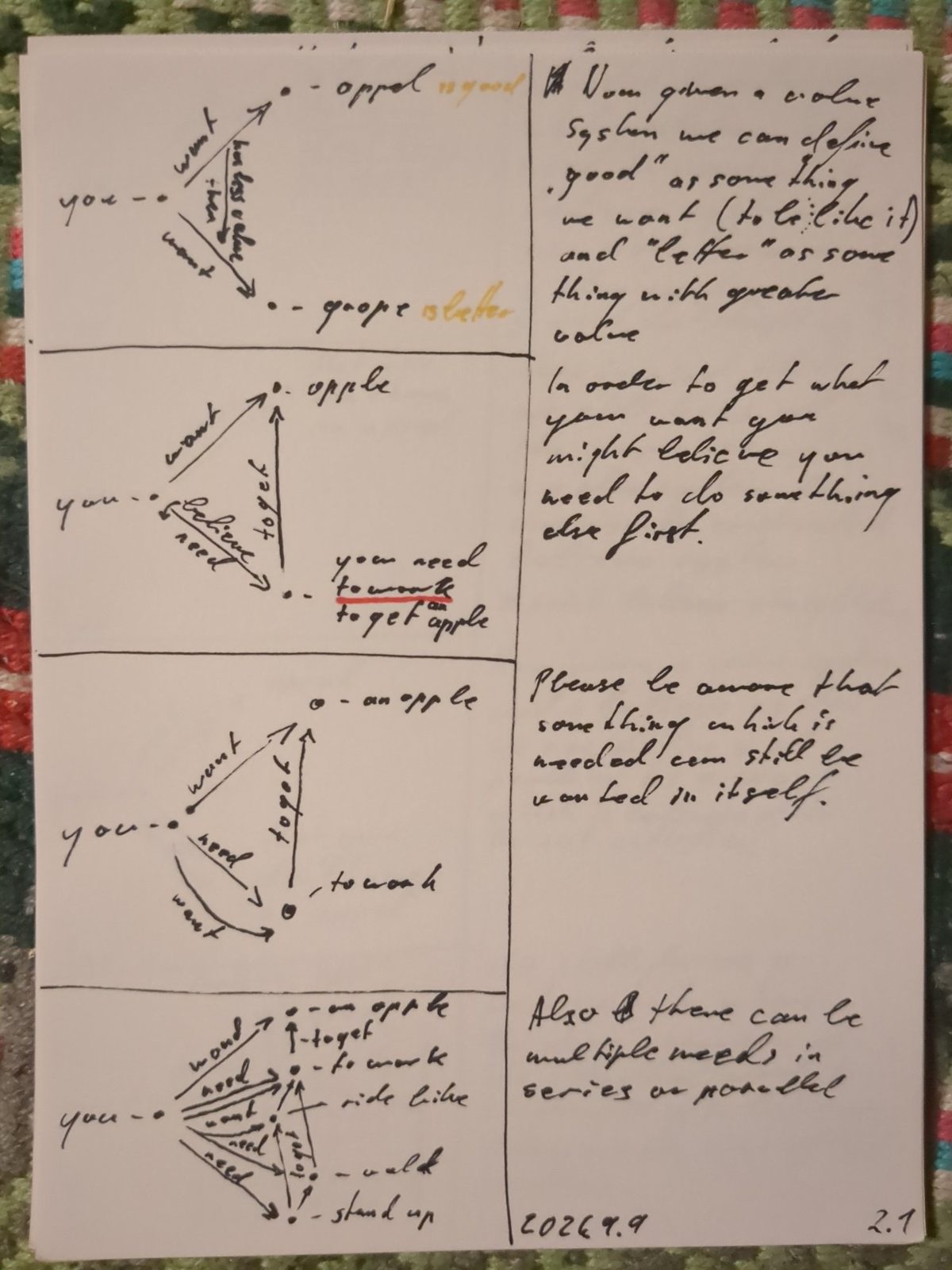
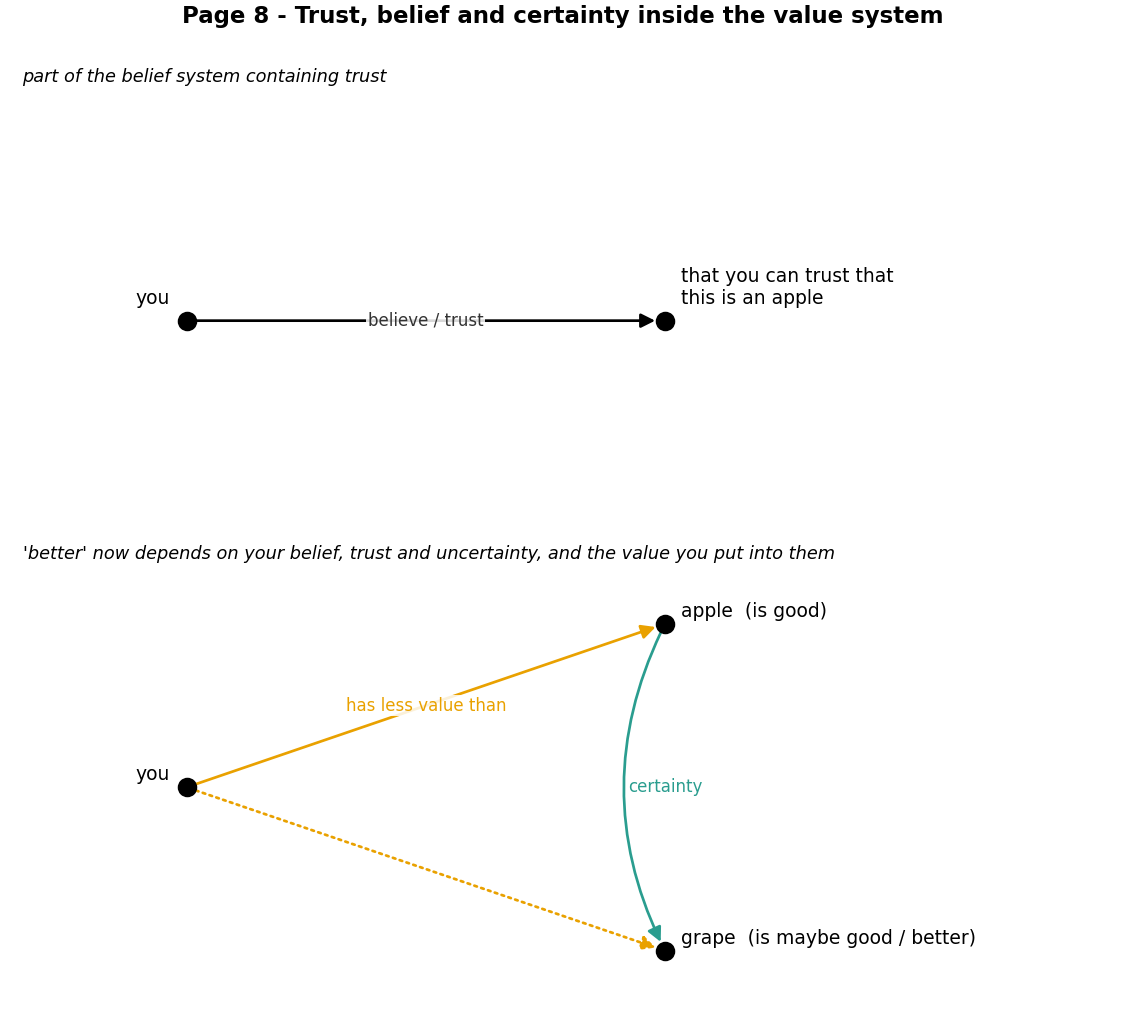
Something is good if it is wanted. Something is better than something else if it is wanted more. This can be said of a single comparison, about just the two things it connects. It can also be said of the whole network: a person may want one thing directly, want another for what it brings, and want those reasons more or less, layer upon layer. Once all of this is weighed, dependencies followed and conflicts resolved, it shows what is better overall. The two can differ. And sometimes there is no answer: two things that no comparisons connect are neither better nor worse than each other. Someone may like one flat more at first sight, and still find the other better once they weigh the way to work, the rent and the neighbourhood.
The same structure elsewhere
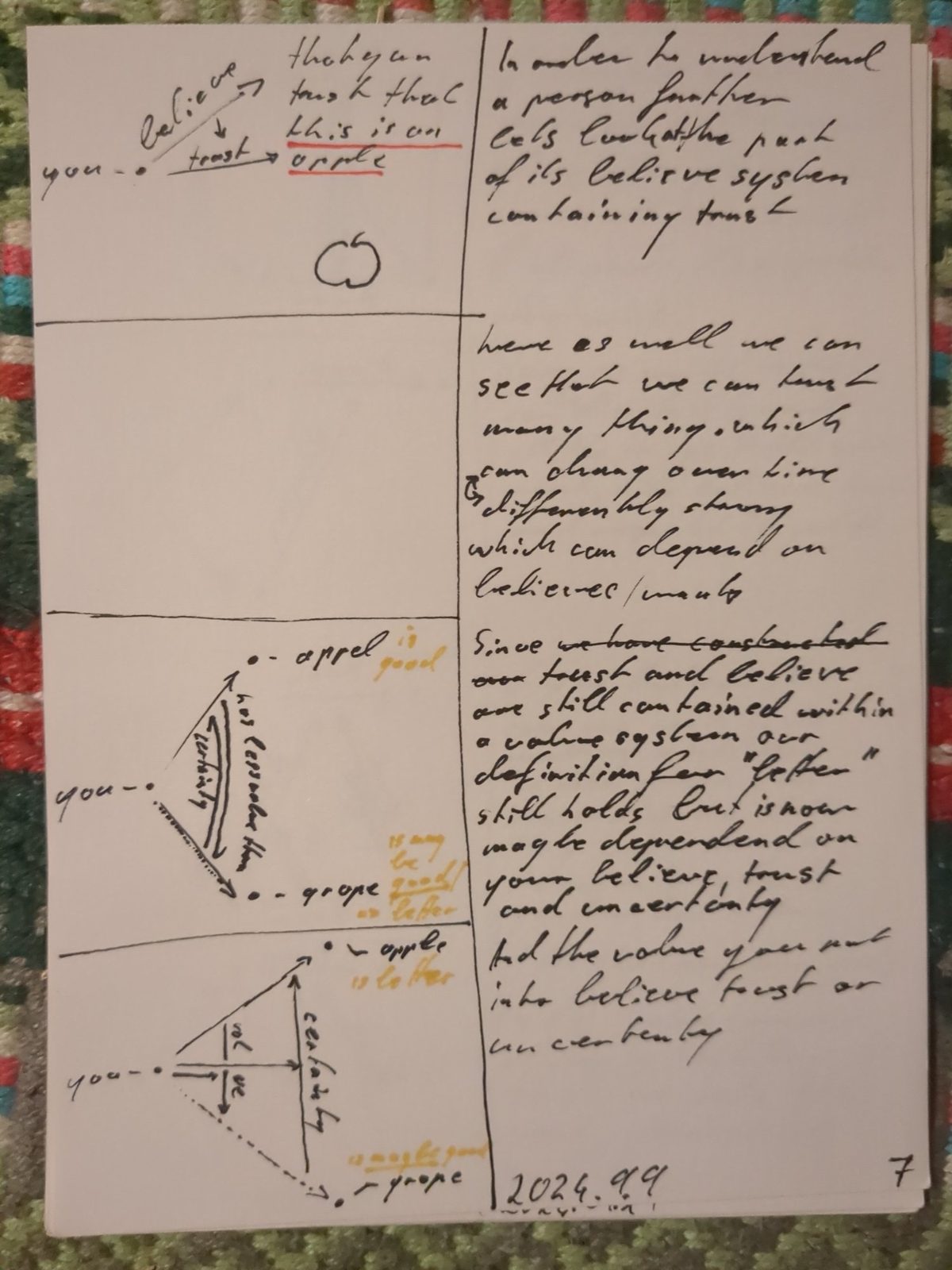
Wants are not the only thing with this structure. What a person believes is complex in the same way: many beliefs at once, held with different certainty, sometimes contradictory, depending on other beliefs and on other persons, uncertain, layered (believing what someone else believes), and changing. The same holds for trust, care, love, fear and hope. Each is a property of its own kind, but all share the same structure.
These are not separate networks lying side by side. They refer to each other. A want depends on a belief; trust depends on what we believe about someone; a fear can contradict a want. Where they meet, and where they conflict, is where the next sections begin.
Draft, awaiting approval
Properties of properties
Because these networks refer to each other, some properties of a person only show when we look at the networks as a whole.
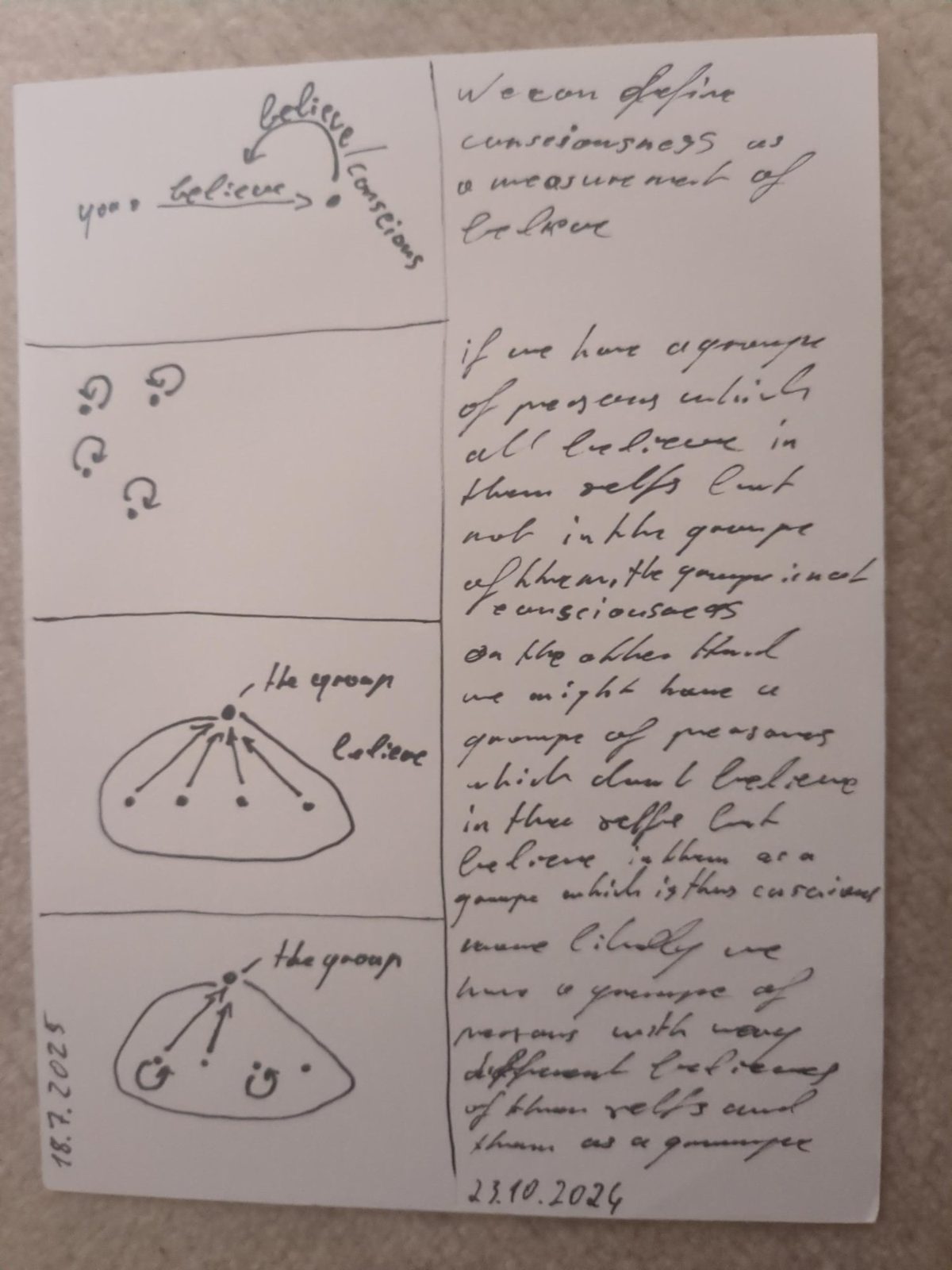
- Consciousness is belief about belief: believing something about what one believes, or about what one is. Someone who notices that they always expect the worst has become conscious of one of their beliefs.
- Wisdom is how much of the network of possible problems around an action a person knows, compared with the whole network, including the problems of others. Someone who has moved city several times knows what can go wrong that a first-timer can't see yet.
- Conflictedness is how much of what a person wants, believes and fears contradicts itself. (Open: within a person, or also with the wants of others?)
- Honour (for later): how strongly a person's actions follow their own value system.
Where wants meet beliefs
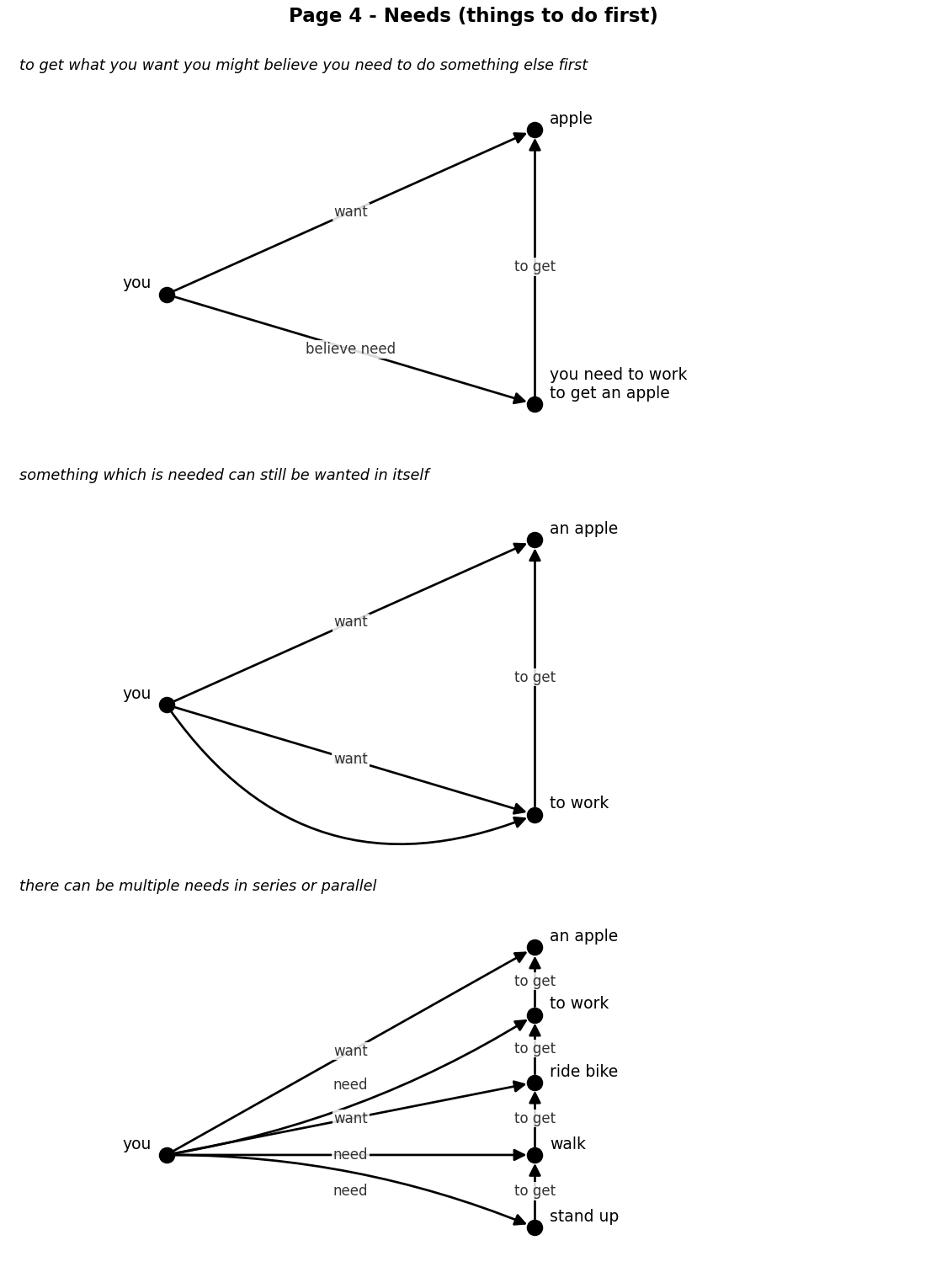
Needs. To get what you want, you may believe you must first do something else. A need is a want together with a belief about how to reach it. Over time, needs often turn into wants of their own. To live together, a couple may believe they first need a bigger flat.
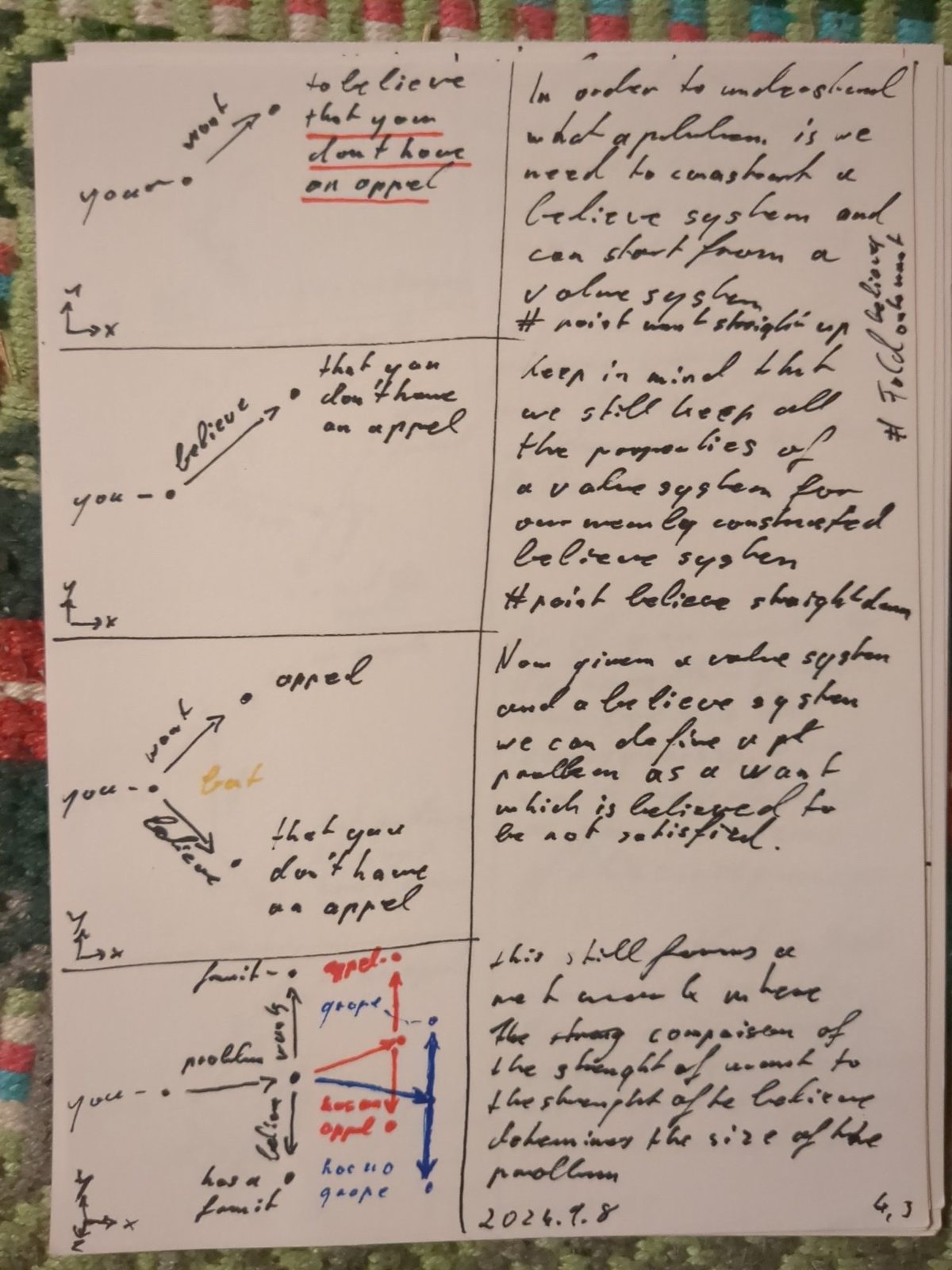
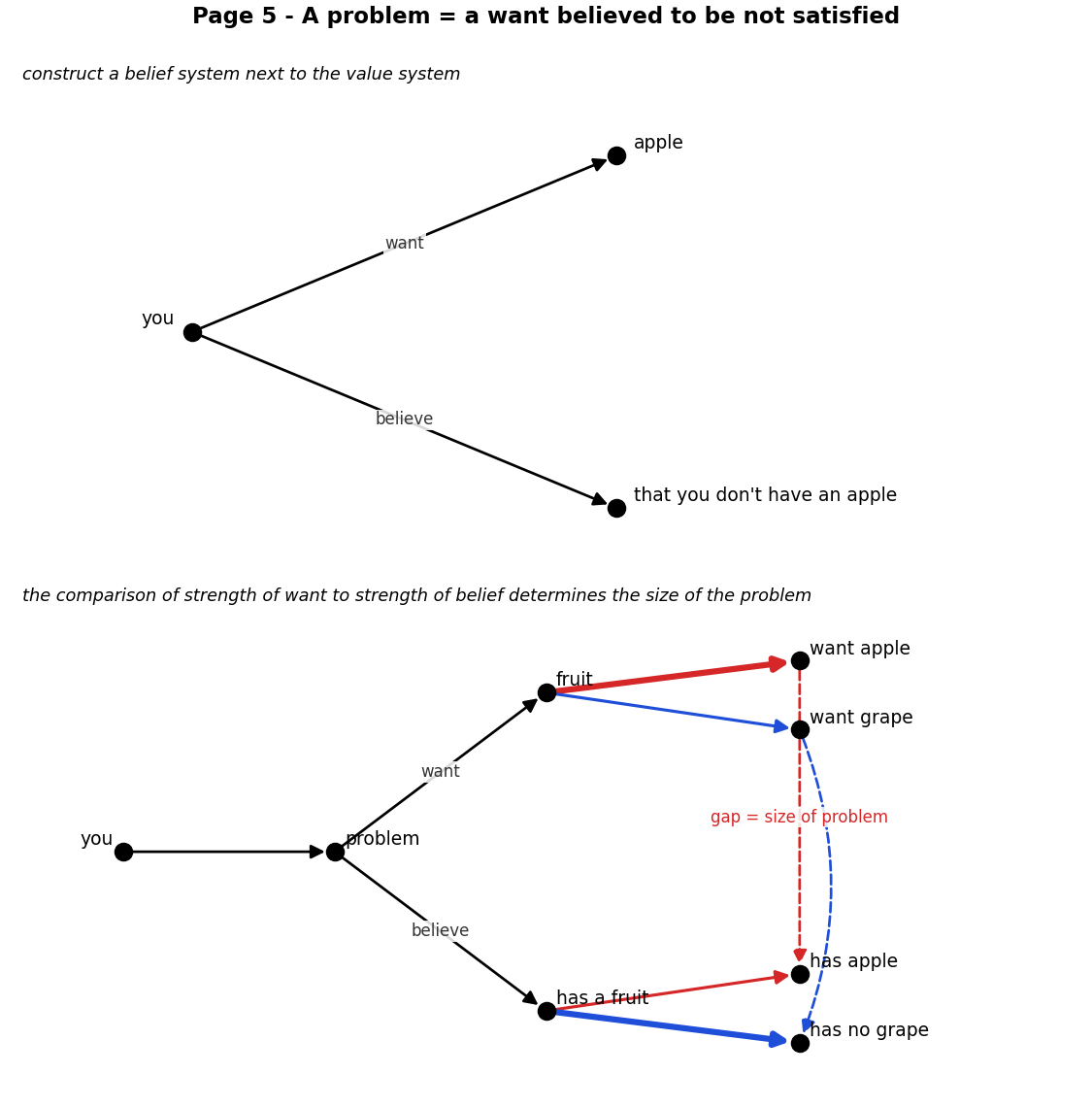
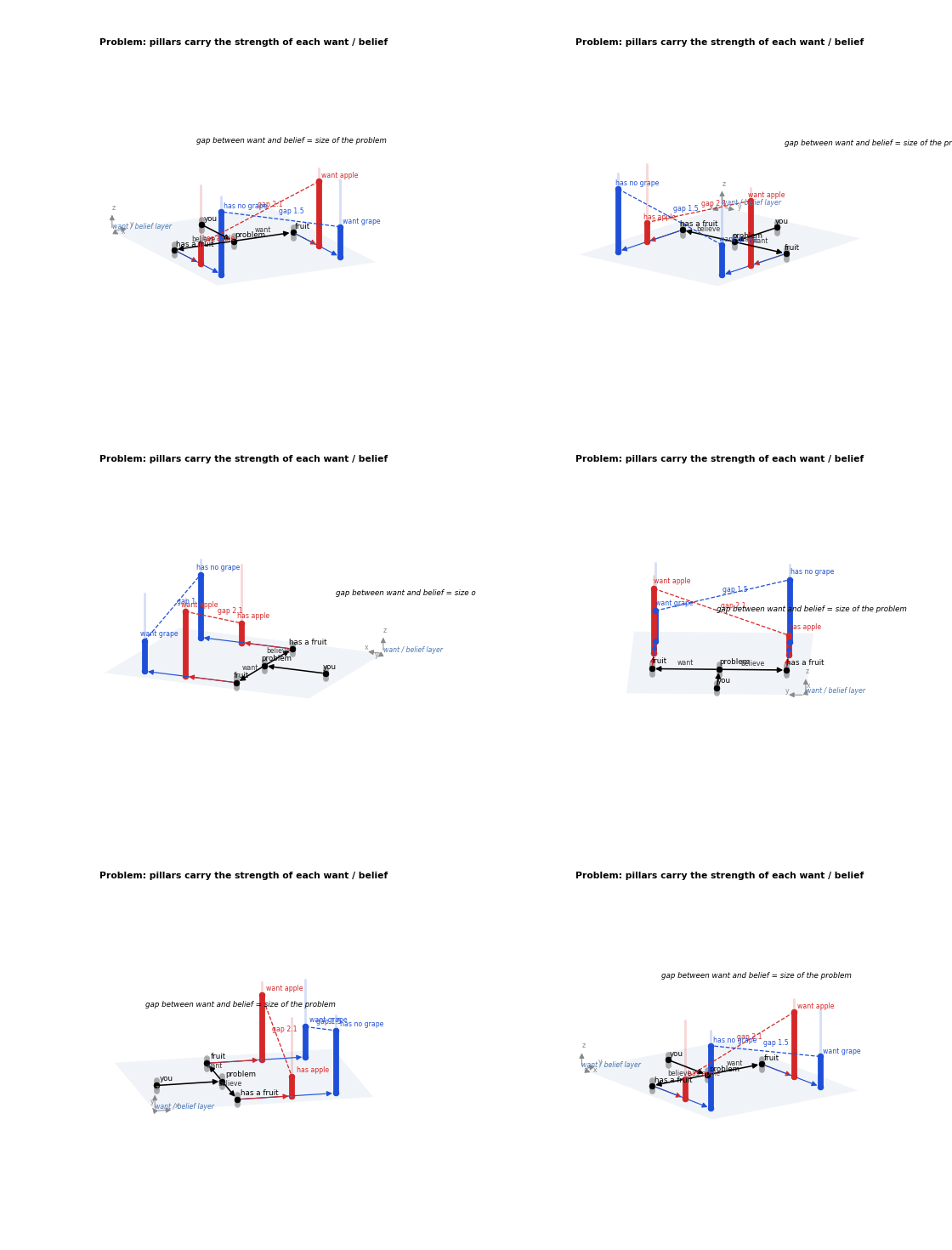
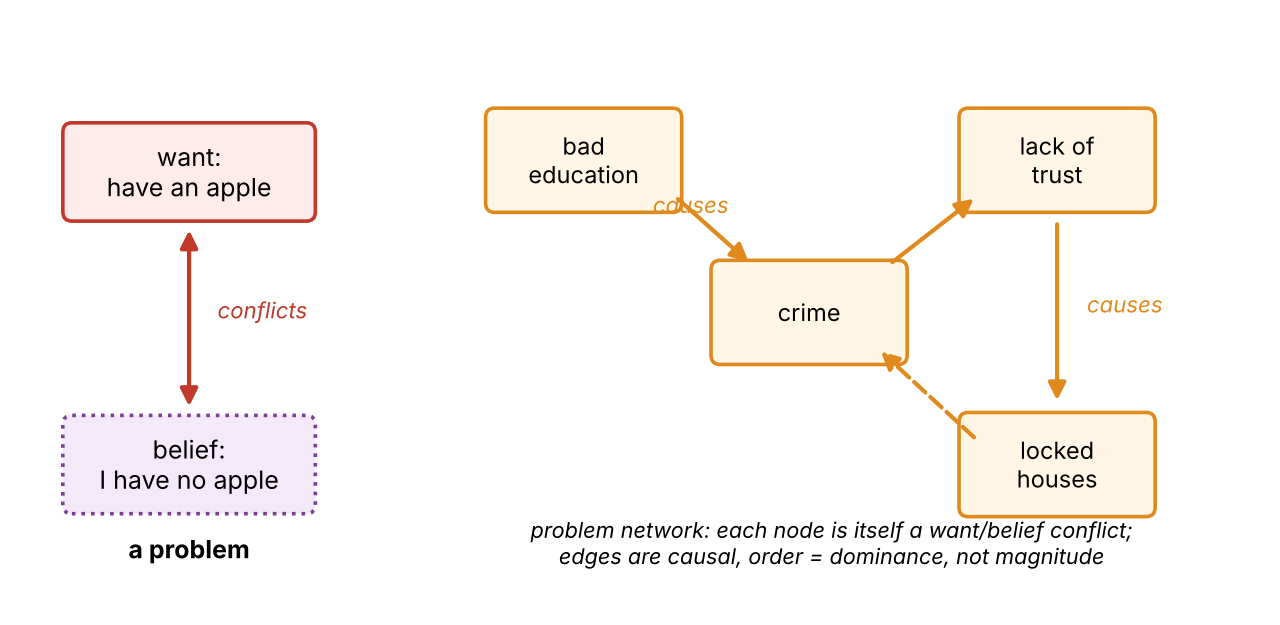
Problems. A want alone is not a problem. A problem is a want together with the belief that it is not satisfied. How big the problem is follows from comparing how strongly the thing is wanted with how strongly the belief is held. Wanting to commit is not a problem; wanting to commit and believing the other doesn't want it is.
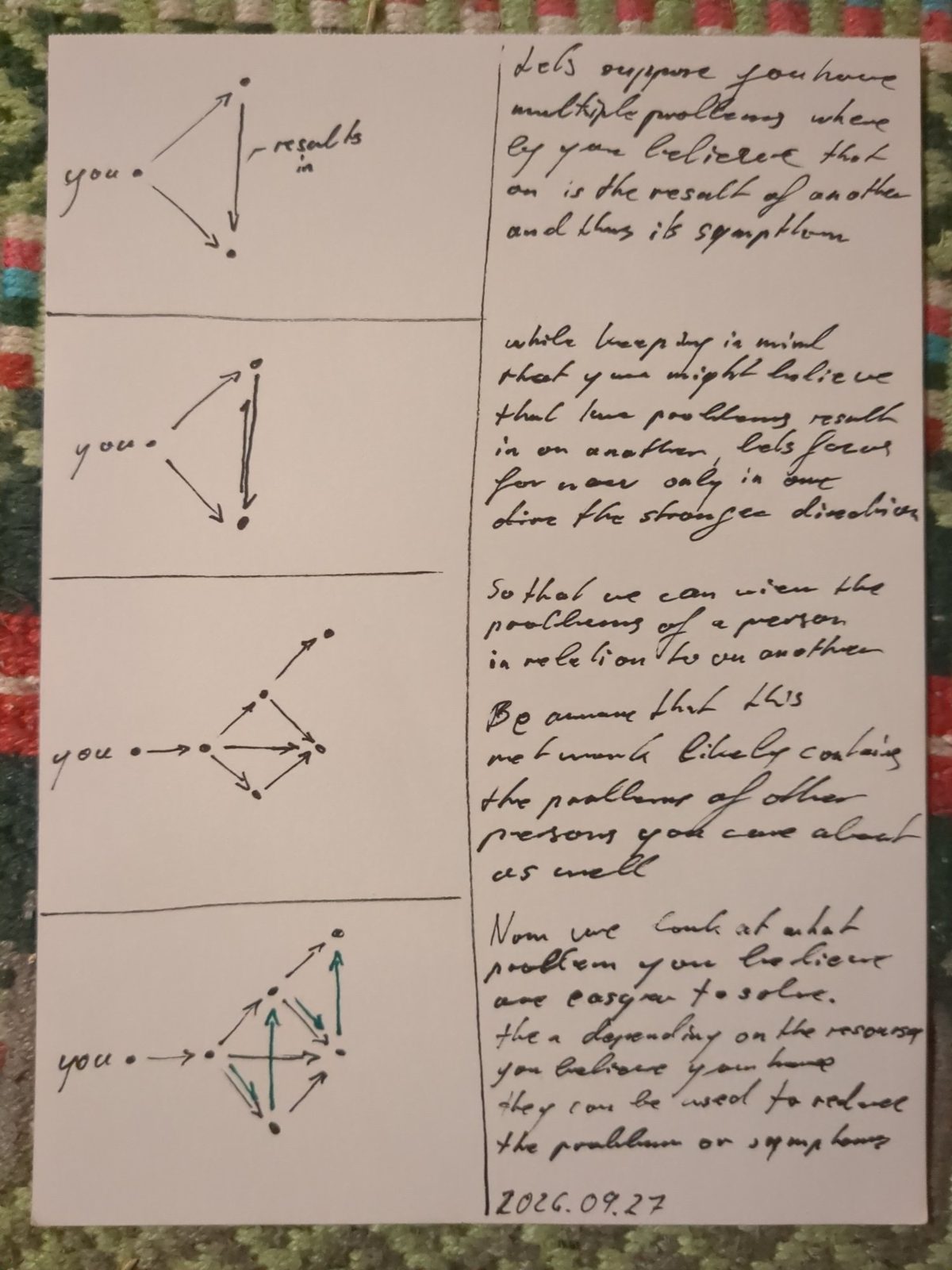
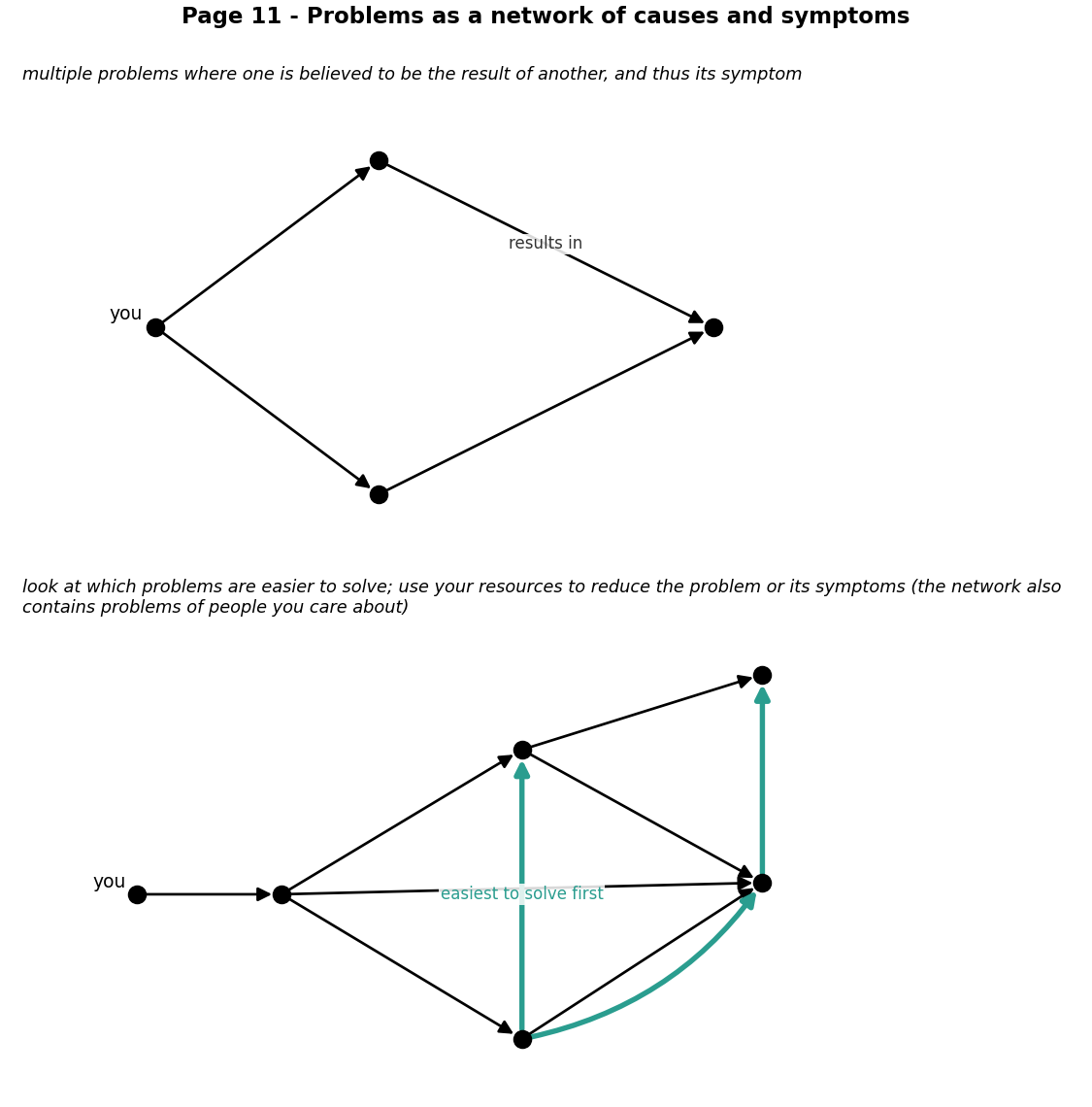
Problem networks. Problems rarely come alone. Some are believed to cause others, and some are only symptoms. Seen as a network, it becomes possible to ask which problems are easiest to solve, and whether an effort reduces a problem or only its symptom. A couple's arguments about the flat may be a symptom; the cause may be that neither is sure the other wants the same.
Where wants meet other persons
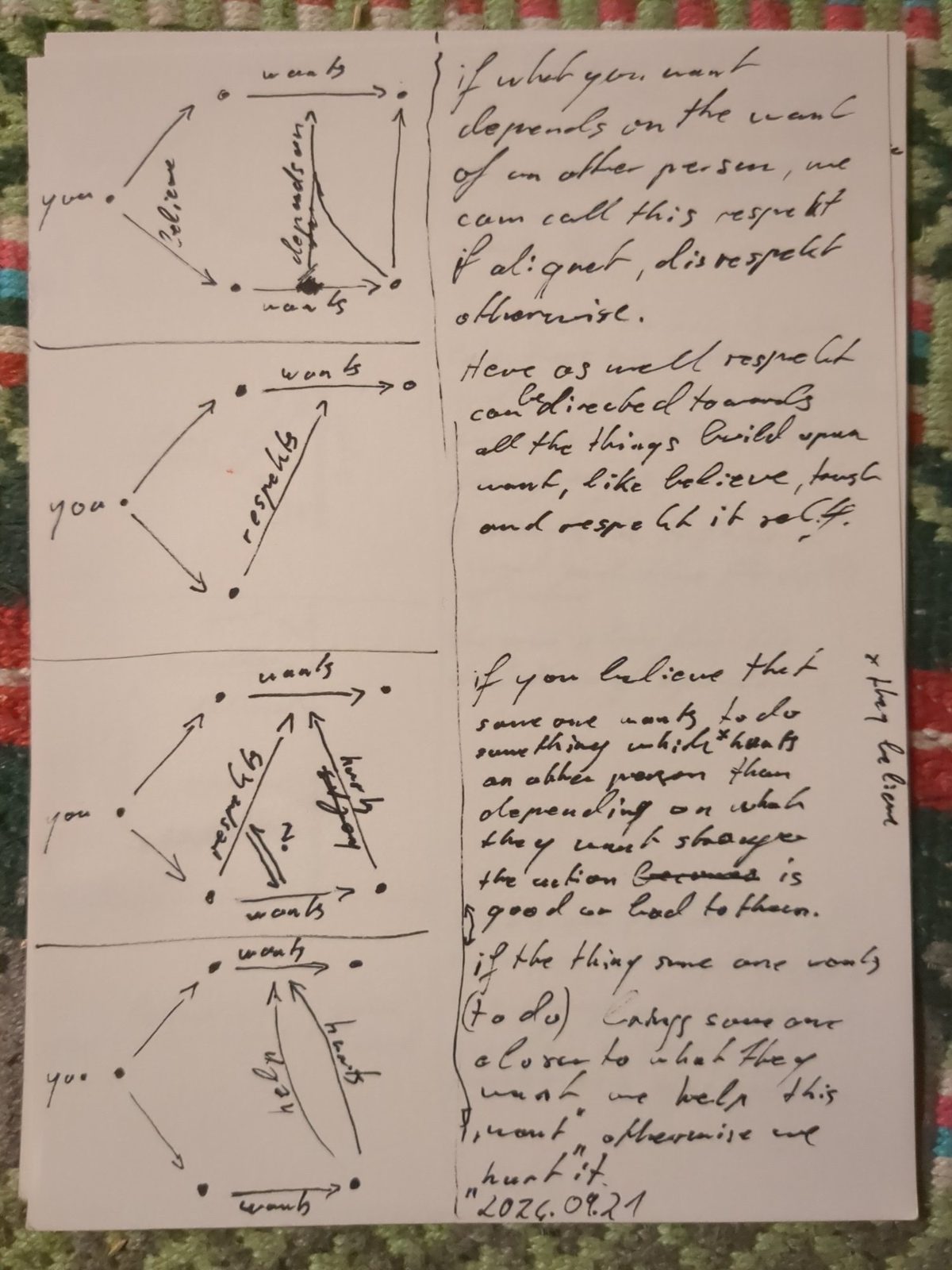
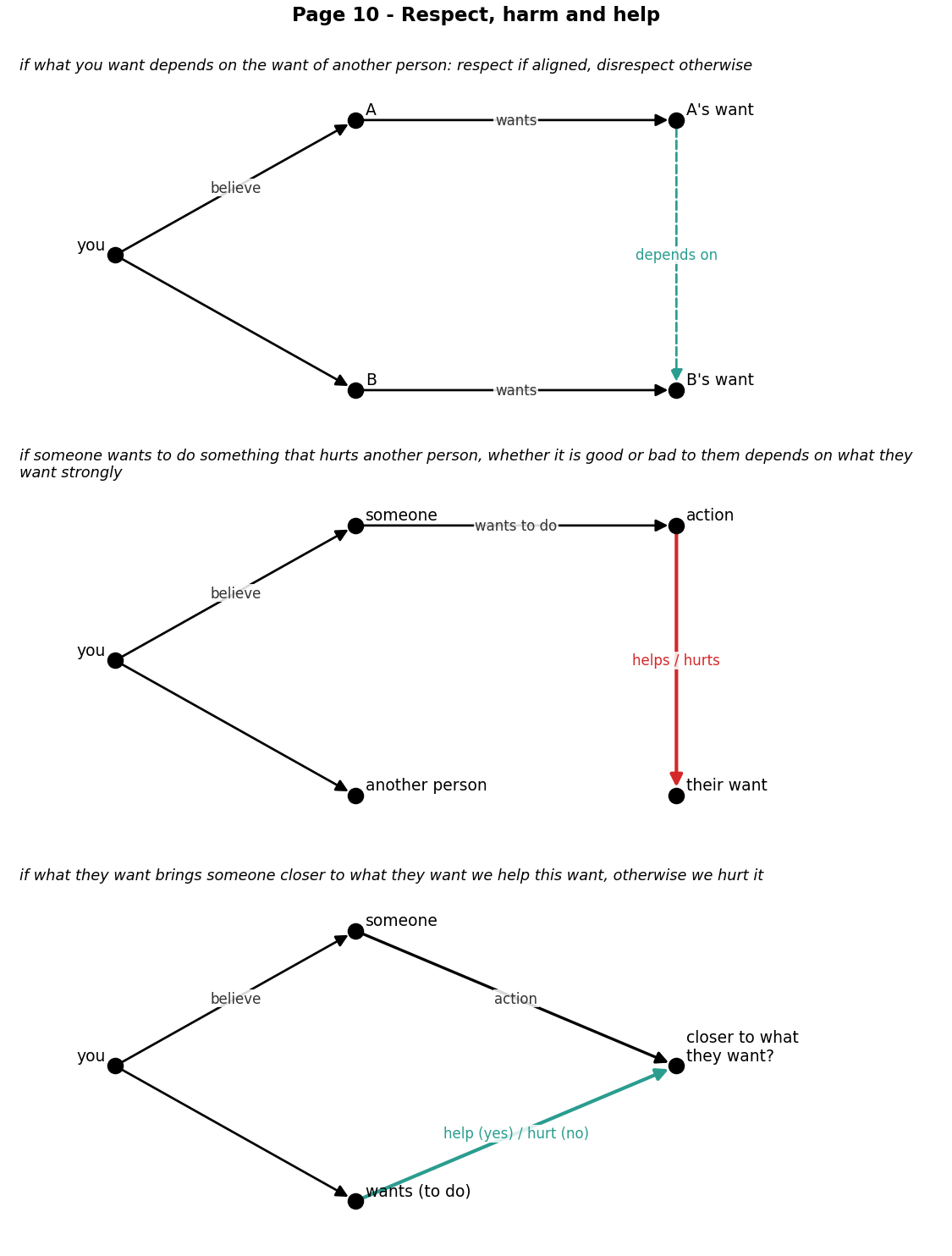
Respect. When what you want depends on what someone else wants, and agrees with it, that is respect. When it depends on it and disagrees, it is disrespect. So respect is not the same as treating everyone the same. A host greets two guests with a hug. One likes being hugged and feels welcome; the other would rather have shaken hands. Both were treated the same, but only one was respected.
Help and hurt. An action that works towards what a person wants helps them. An action that works against what a person wants hurts them. The same action can help one person and hurt another. Telling a friend a hard truth can hurt them now and help them later.
This leads to the principle the rest of this site builds on.
What a person wants includes how it depends on others: dependency is one of the properties of every want. So doing the best for oneself, thought through completely, is not the same as acting selfishly in the narrow sense. Someone who leaves out how their wants depend on others is not more selfish, only less complete. Whoever takes that part into account may well act in favour of others by doing what is best for themselves.
Whether this happens depends on two things: knowing those dependencies, and being able to act on them. Both depend on more than the single person. A choice that allows only one answer, where many things are wanted at once, can't carry how they depend on each other. A price can't carry for whom, or under which conditions, something is wanted. Where the structures we decide with leave no room for these dependencies, people learn to leave them out. Not because they don't care, but because there is nowhere to put them.
So the following articles ask how a society can find out what its members want, in all of its structure, and act on it: where the systems we have today don't listen to these properties, and how they could be changed so that they do.